I very much think that folks on HN are jaded by the long wait and the unfulfilled promises of VR. I recently picked up a Quest 2 as my first VR headset and I am blown away and convinced it is the future. The thing is, I also recognize that while it is already an incredible achievement, it's still probably 5-20 years from hitting its iPhone moment. By then, my initial excitement will have gone away and I'll have tired of waiting too.
But for all you jaded folks out there, let me tell you that this is an absolutely unstoppable evolution of computing. All entertainment since sung epic poetry has aimed to briefly take us into another world. Plays, novels, movies, theme parks, and video games have always offered immersive fantasy. This is the ultimate fufilment of that very human impulse, to consciously enter another world. If we lose sight of that, then it will be up to the next generation of technologists to create it.
There will never be an iphone moment because its not a product useful to literally every person. Gaming consoles and PCs have not had an "iphone moment" after decades because their market is and always will be limited.
I don't see why people are so obsessed with instant and explosive growth. Almost no recreational product has seen this kind of growth and they have all continued to exist just fine.
VR is ready today if its something you want. Its fun, cheap enough and has loads of games. If you hold out for something better you will always be waiting because there will always be something much better in 5 years.
Education (language learning, geography, biology, engineering...), real estate, porn, psychology, situational training (firemen), scientific visualization and collaboration, spatial painting and other artforms, social interaction, movie shots planning, etc.
All of the things mentioned are already being done without VR headsets. People can go through their entire lives not realizing they've been stereoblind. The world seems as real to them as to anybody else. It's not obvious to me VR is such a huge game changer.
Suppose we had 2 computer games.
One that perfectly reproduced real world "graphics" and "gameplay", looks like a real life high resolution video. Everything is life-like but you use fairly standard controls and a regular display.
Second that comes with perfect VR integration including physical resistance somehow, unlimited running space, ability to taste foods and whatnot. But the mechanics and graphics would still be off (current-gen).
It's pretty clear to me #1 would be way more immersive and the bottleneck is game/simulation tech, not VR tech.
> All of the things mentioned are already being done without VR headsets. People can go through their entire lives not realizing they've been stereoblind.
This comments sounds like what people would've been saying of smartphones: "I've gone my while life without a smartphone, why do I need one now?"
I said the same thing about smartphones, big screen TVs, good office chairs and a few other things. You either learn from your mistakes, or you don't.
> All of the things mentioned are already being done without VR headsets.
Not all, no.
You can't lay paint strokes in mid-air around you if you are not in a virtual reality with different physics. That art form simply did not exist before.
You can't understand whether the dimensions and arrangement of a not-yet-built house or movie set is appropriate if you can't visit it in person. It's a threshold change from seeing a model or a 2d tour.
If you are a burn victim, you can't "escape" your thoughts unless your visual cortex is completely flooded by imagery. Similarly, researchers trick the brain of people with spinal cord injuries to reconnect or regrow neurons. Again the "headphones-for-your-eyes" aspect that floods your input channels is used to trick the brain, and this was simply not imaginable before.
Depending on your definition of "mechanics", the second sounds significantly more immersive to me. If the graphics look like Toy Story, so be it. I don't mind if the movement is slightly janky, considering how imprecise a keyboard or controller is to start with.
It can be used for these things but is it really an improvement ?
> real estate
How often do you do that ? Once every few years ? Aren't regular 3d models / regular virtual visits enough ?
> porn
Tried it, extremely awkward at best
> psychology
?
> situational training (firemen)
You can train in your Vive for 5 years straight, nothing will prepare you to the real deal. Just like playing a racing video game doesn't make you a racer.
> scientific visualization and collaboration
It's neat but does it change anything fundamentally ?
> social interaction
Nothing will replace real world interactions, be it facebook or VR it's all a gimmicky at best
> movie shots planning
?
Sounds like a solution looking for a problem. VR isn't new at all and besides gaming it really didn't pick up speed in any other industry. If anything AR could be a "revolution", if miniaturised enough (contact lenses size).
I received a free HTC vive after participating to a conference in 2016, used it a month and it's in a drawer since then. None of what the speakers were promising happened, VR is still the thing you get out once every 6 months to show it to a friend, the wow factor lasts 30 mins.
Yes it's true it's larger than books and movies, but games in the end just compete with other forms of media for customers' entertainment dollars.
Unless we can come up with a use case for VR beyond gaming and fulfilling escapist fantasies. It will likely just be another contender for entertainment dollars.
Smartphones on the other hand essentially made it possible to do anything a general desktop pc could do for people on the go without having to be tethered to a chair infront of a desk. Phones can be used for payment, notetaking, etc. There are people who use smartphones and don't play games at all.
And the ultimate use case of VR is that you will be able to be "on the go" without ever leaving your chair -- in a form that's good enough that it doesn't feel inferior to being in person.
It's sort of the inverse of the smartphone use case.
Is it there yet? Of course not. But if/when it does get there... that's a much more compelling use case than a smartphone.
This is true but I think this is mostly irrelevant to the topic at hand. If VR was as popular as PS4 then we'd have said "VR took off". It doesn't need to be as popular as smartphones to be called successful but it's arguably not successful yet by many definitions. It certainly hasn't "taken off"
Most gaming accessories never took off. The racing wheel has been available for decades now and never "took off" and yet it never went away either. Racing wheels have a market and will continue to forever.
I predict VR will be slightly larger than the racing wheel market but they will not become super common in the next decade because they require a large amount of space. This doesn't matter at all because even today VR games and hardware are great fun to use.
The usecase I always envisioned was an all-in-one replacement for multi-monitor setup, TV, and essentially all visual media. I also imagined the flexibility to operate a computer in bright sunlight or while laying in bed thanks to a the goggles being sealed and replacing your vision. This is surely only a matter of the technology improving a bit. I believe a redesign of periphals suited to the ergonomics of VR would be required for my particular vision to be achieved. I suppose what I'm talking about is just a HMD but it could be optionally combined with head tracking like the implementations that exist now. I recall many years ago that HMDs where available so theyre nothing new. Why didnt they take off? Too clunky? Unpleasant somehow?
nowhere near comparable in reach. Way more people watch movies than play games. Since movies are typically cheaper to consume, it appears as a smaller industry while it is actually bigger in reach.
I'd imagine the $ spent per unit of time for games today (especially live service games) is very low. In fact, I believe gaming is one of the most cost effective forms of entertainment. There are games that can be completed in a few hours, but on the other end of the spectrum you have people playing a single game for thousands to even tens of thousands of hours.
In addition, there are unlimited streaming services for games, one of which being Xbox Game Pass which is growing in popularity. Unfortunately it doesn't feel the same because how many games can one truly complete on a monthly basis?
It’s close between books and video games, depending on which examples you choose. If you chose a best seller from 2020, say A Promised Land, it’s $25 for approximately 15-20 hours of entertainment. I think most books are at a $/hour or less.
Single player video games are also in that range - 30-40 hours of gameplay for $60. But where it gets really crazy is endless games (Sims, Factorio, Simulators) or free to play games (League of Legends, Fortnite) where you could be entertained for thousands of hours for a couple of dollars. I personally played a free to play game for 2000 hours while spending about $40 total on it.
Even movies are pretty cheap, considering we most of us watch what’s included in our monthly subscriptions of Netflix/Amazon/Disney. Even buying/renting movies works out to about 1$/hour.
Conclusion - we’re in a golden era for entertainment where the options are nearly unlimited and dirt cheap.
Once upon a time, the iPod wasn't useful to every person, because not everyone wanted to take music with them wherever they went. Nowadays, if you don't have a phone in your pocket that can play music, you're in the minority of the world population.
I think that at some point there will be an iPhone moment for VR. However, I think we're still far enough away from it to not know what it'll look like.
It's not just the market penetration of the smartphone but time spent engaging with it that makes it so successful as a platform. VR's biggest handicap is that it tends to be tethered/unwieldy to be useful for day to day applications.
The Quest (1/2) isn't tethered, and runs for hours off battery. It's about as wieldy as I can imagine these getting for a while...
Which is to say, it's still an unwieldy box you put on your head. But even hand-tracking works well now, so for a lot of games you don't strictly need the controllers.
I'm not sure why there's an expectation that the consumer VR market is going to grow by orders of magnitude. I think the market is basically what it's going to be.
It's a great demo but not something I want to spend much time in.
The headsets are pretty cool - I’ve played with all of them except for the Valve Index.
Though there’s something unpleasant about them that keeps me from going back when the novelty wears off. I think it might be because I don’t want to be standing and moving around when playing a game and if you’re not doing that, the motion is kind of unpleasant.
I’m not sure this is something it can really overcome. I think an AR overlay of our actual world is more likely to be the next real platform (assuming the hardware is possible to pull off something like this).
Being in VR is just kind of an unpleasant/isolating experience for me and I’m a pretty early adopter of most things.
In other people I’ve mostly seen a small number of games (mostly beat saber) keep people coming back, but I haven’t seen most people keep using it once the novelty wears off outside of that.
I think there are probably some narrow applications where it’s clearly better than not having it, but I’m skeptical of VR as a platform.
Maybe when the hardware is 10x better/lighter it’ll be a difference experience? We are pretty early on in the medium, movies and tv were pretty bad for the first fifty years. It might just take a while for people to figure out how to use VR well.
> I think there are probably some narrow applications where it’s clearly better than not having it, but I’m skeptical of VR as a platform.
Fitness. It is much easier to grind in a VR game for an hour than it is to grind on a treadmill for the same amount of time.
I have a Quest, the games suck, but the fitness experience is paradigm changing. Beat Saber was and still is the Quest's killer app, but there are lot of similar games that keep the experience somewhat fresh (not to mention new beat saber music packs, I also use FitXR more than Beat Saber).
I bought my Quest back in May 2019, it died around June 2020, but I was already using it a couple of hours a day by then so had to get a new one from a scalper (during the Pandemic, Quest units were hard to get). I really don't want to go back to life without it.
Yeah, I used to struggle to get a work-out in most days. When I'm not feeling it, I play Thrill of the Fight on my Quest (boxing game - I'm a casual boxing fan). It's the most I sweat out of any workout, and I can go for 45 without getting bored (unlike the rower or going for a run).
I actually got the Quest 2 when it came out, but being as the Quest 1 plays that game fine, and I figure I'll ruin it by sweating into it so much, I hardly use my Quest 2 at this point.
Untethered is the future, and once they get lighter and more comfortable they'll be killer devices. I do find the complete shut-off from the real world a little unpleasant, and especially fumbling around for controllers now and again when the unit is on my face. But otherwise, I've gone from skeptic to fan for VR. (And I do think longer term AR is where it will really take off).
I‘ve had a Quest 1 and loved most of it, except that for me, it was extremely uncomfortable and even left marks in my face after a while. So I sold it before the Quest 2 was released.
For me a VR headset needs to be at most half the weight of a Quest 1 (~0.5kg) to consider it for now. And a bigger FOV would also be nice :-)
Be sure to mod and side load custom Beat Saber tracks if you haven’t already. Dancing (sabering?) to songs you actually know makes the whole thing way more fun.
Fitness? The idea of puffing and sweating inside a heavy VR headset doesn't seem very alluring to me for some reason... Besides, I personally think fitness should be about reconnecting with the body and the real world, not "grinding" and distracting yourself while getting this physical thing done.
We are developing an open source VR fitness game and after almost a year of exercising im VR I can tell you that in my case the sweat inside of your headset is not a problem but you should use the right VR cover. The stock ones of the Quest are very hard to keep clean.
The sweat on the rest of your body is a completely different issue. After about 40 minutes of VRWorkout I usually look like coming fresh out of the shower. Without VR I could never build up the willpower to "grind on" for so long.
Our game does not try to put the game aspect first but the workout. The game elements are subordinate to the movements if your body and the muscles you are using not the other way around.
That's something we have can't compromise on since the movements that are expected from the player (jumping, pushups, crunches, burpees) should not be compromised by trying to achieve some arbitrary goal like hitting an enemy.
We are mainly using SideQuest and Steam, we don't expect Oculus to approve this in the official store so the time is better spent on the development side.
BUT, Oculus will officialy allow third party games in some form starting early in 2021. So if you are not a SideQuest user you will still be able to use it hopefully soon.
Although I'd really recommend SideQuest it adds a lot of value to your headset.
Another alternative would be to use our experimental WebXR version, but that is really only for a quick peek, it's not on par with the native version, not even close.
It did not sound remotely interesting or compelling to me until I tried it. It turns out it's a great way to get moving without feeling like you're putting work into it. For example, I've been using Thrill of the Fight to de-stress after work. It's incredibly effective at that because your brain gets tricked into thinking you're in an actual fight and millions of years of fight or flight stress response kicks in. Afterwards three rounds you feel the kind of release from stress that it would take hours of traditional stress management techniques to achieve. All without the head trauma!
> The idea of puffing and sweating inside a heavy VR headset doesn't seem very alluring to me for some reason...
It is like hanging out in a sweaty gym, you get used to it. But the quest isn't exactly idea for it, which is why I think my headset konked out after a year of heavy use. I hope it gets better.
> not "grinding" and distracting yourself while getting this physical thing done.
To each their own of course. Shadow boxing has been a thing for a few decades now, this is just shadow boxing to music with visual, audio, and a bit of force feedback. I personally need to be distracted, and I like to be able to keep my heart rate at 70-80% without expending extra will power.
I like Beatsaber a lot, it is less of a grind than FitXR, but I still come back to FitXR since I can get a better workout there (Beatsaber is a good warmup).
What's wrong with distraction? Plenty of people stay in shape as a side-effect of their enjoyment of sports and games. Am I not really working out when I play soccer or go rock climbing?
There's nothing wrong with it per se. To each their own. I don't see playing soccer or rock climbing as "distraction", on the contrary. I mean distraction as in distracting your mind from the present moment.
For example, I used to go running and weightlifting while listening to music and podcasts for example, because I was in the mindset of physical exercise == unpleasant & time consuming therefore I must distract myself "to get it over with". VR workouts sound a lot like an idea coming from that same mindset.
I keep in good physical condition in every possible manner: running trails, playing soccer, lifting weights, hell even playing DDR.
Fitness is literally getting your body into a more physically fit form, it has nothing to do with "connecting with the real world.", whatever that means. I'm down with anything that motivates people to elevate their heart rate.
Do you suffer from disability or live under oppressive weather conditions? Because why not just go outside? I searched for Beat Saber and found that it's basically Fruit Ninja on VR.
No disrespect to you, but I can't help but feel sad about the future that that video game points to. Your last sentence, especially, is for me really lamentable, in the literal sense of that word.
I live in a nice climate (well, when it isn't raining) and walk/bike a lot, or play with my kid, etc... There is still something to be said for a focused workout that you can make into a routine that is easy to stick to.
Long time PC gamer, DK1, DK2, CV1, Index, Quest 1, and Quest 2 owner here.
I understand where you're coming from, but I disagree.
When I first got into VR back in 2013 it was cool for a minute, then the novelty wore off. I dabbled with it over the years, but it never stuck. I felt like you do.
2016 the CV1 came out and I was briefly reunited with a strong interest in VR which, eventually, faded. The next few years I didn't play much, and when I did, it wasn't for very long.
The problem was entirely CONTENT and it is FINALLY in 2020 starting to come around.
We have seen some absolutely excellent AAA games released that are loads of fun and not just glorified tech demos (though to be sure, those still exist).
- POPULATION:ONE
- Metal of Honor: Above and Beyond
- Half Life: Alyx
- Asgard's Wrath
Any many more. I'm finally finding myself using my VR headsets DAILY. In fact my Oculus CV1 which came out 4 years ago is still my all around favorite!
I think as content improves (especially multiplayer content) and the headsets get more comfortable and easy to put on / take off, we will hopefully see continued expansion of this medium. It's THE way to game, if you ask me. Nothing is more engaging then jumping off a building, spreading my arms to fly, then pulling them together to grip my gun and land a quick snipe on someone in mid air. Keyboard and mouse can suck it.
Hypothesis: The reason having to stand up (or more generally put physical effort) on games turns you off is because you're looking for a different thing in games, probably just turning off your brain.
The appeal, unarguably I believe, is in being immersed in the fantasy, which I think is a different kind of appeal from what you seek. I actively dislike "abnegation" type games, but the idea of being transported to somewhere else, exploring different realities, amazes me (I'm dying to try Myst on VR), and putting physical effort on it adds to the fantasy. So maybe VR isn't for you, simple as that.
I've seem lots of people (online, yes, but still) keep coming back for Pavlov, Population One, Half-Life Alyx, Star Wars Squadron, VR Chat... I really think there's something there.
> I think it might be because I don’t want to be standing and moving around when playing a game and if you’re not doing that, the motion is kind of unpleasant.
Could this be because of the missing resistance while moving / throwing / touching VR objects?
VR tries a few tricks for this, teleportation, tunnel vision, etc. but ultimately if you're doing movement like you would in a normal FPS/RPG style game where your character is walking and you are not it's unpleasant.
You can get used to it, but I still prefer just sitting and playing on a couch with a TV. The VR controls are still a little clunky though and better haptics would definitely help, but that's not most of the issue.
>because I don’t want to be standing and moving around when playing a game and if you’re not doing that, the motion is kind of unpleasant.
This is what stops me from buying VR. I don’t want a new form of gaming(r)(tm), I just need 3D display and my chair, kbd & mouse to play my regular AAA games as-is, but with depth perception and appropriate fov. Instead they suggest you to stand and waive your arms in few pretty average if not crappy games. Also, finding a VR-enabled game that will actually work with your headset is not as easy as one may think.
> I think it might be because I don’t want to be standing and moving around when playing a game and if you’re not doing that, the motion is kind of unpleasant.
Project Cars 2 and DCS make it worth the headset alone - throw in Elite Dangerous and No Man Sky and I have enough VR entertainment to keep me busy for the foreseeable.
I'm dying for gaming PC parts to become more available to build a new rig. I hacked together my OG Pixel XL to play E:D on my current potato via the Daydream headset and Riftcat and got to enjoy a very pixelated experience for all of 10 min before my phone rebooted so it wouldn't melt. It was still night and day.
How are both those games with the Quest 2? Those two are my primary interested for VR but I worry about the resolution, frame rate, and controls with my motion sickness.
Currently use a Rift S but I have two Oculus Quests on the way one for the boy and one for me (it was originally just one for him but then amazon/hermes dropped me in the shit so I went and bought one for him so I'd have it for xmas and am still waiting for the other to turn up at some point).
In the Rift S on a 2080 it's jaw dropping, I'm hoping the 50% res boost on the Quest 2 will make it more so.
I also have a T16000M on the way because of the limitations of VR is you can't see the keyboard so I need more buttons to map everything plus it's a full HOTAS so will work great for DCS.
As a Quest owner, and previous Vive owner, if you can get over the Facebook thing, I would 100% buy the Quest 2 over anything else. The Index might be better, but it costs 2-3x more, and only works on PC, and needs the lighthouses.
The hassle you skip with inside-out tracking is worth it on it's own, and the Quest games are honestly pretty good, and I haven't had any issues with Link to PC. Great for PC VR, great for taking with you to family/friends for fun demos (post-covid).
I strongly dislike the forced Facebook integration, but it's hard to contest that Oculus Quest (and likely 2) is a fantastic product.
For some reason, Elite Dangerous throws the graphics into low for me, no matter what settings I have. On the computer it looks great, whenever I put it on the Quest 2 it looks horribly pixelly.
Even so, it's incredibly immersive, and if that problem gets fixed it's going to be amazing.
> I think it might be because I don’t want to be standing and moving around when playing a game and if you’re not doing that, the motion is kind of unpleasant.
I'm the exact opposite. I enjoy that a lot more. It's more immersive, and I've already lost about 15 lbs just playing VR. imo it's a fitness machine disguised as a video game peripheral
Facebook's Quest 2 is an impressive piece of tech.
One of the biggest reasons to be skeptical of VR taking off is that Facebook is one of the major players. Between the login shenanigans and their anti-competitive dealings with developers, they have an opportunity to single-handedly tank the industry.
It's the ONLY player on the "stand-alone" headset space.
There's some competition on PC headsets, Rift headsets are not even the best, feature-wise. But just like the quest, they score very high on the cost-benefit analysis (I guess we pay with a combination of cash and data).
I agree. For tech to take off you really need a significant "platform" player to emerge - someone that is able to position themselves as a middleman where the value made by 3rd parties significantly outweighs the value made by the middleman. That is what causes a technology to really bloom and get broadscale uptake. Facebook just isn't interested in that. They'd rather have a smaller pie where they own it all than capture a larger piece of a giant pie but be just one part of it.
For sure this is his play. My early take is that the VR/AR social experience is absolutely the killer app and will beat the pants off phone, chat, social feeds and video calls. It will be so good that it will be the default way to commutate at a distance, making it a huge threat to Facebook, Instagram, Whatsapp, and Messenger. I think the fufilment of that promise is still probably more than a decade out.
>For sure this is his play. My early take is that the VR/AR social experience is absolutely the killer app and will beat the pants off phone, chat, social feeds and video calls.
And that, IMHO, is why FB wants you to use FB login for your VR experience.
It's also the definition of disallowed monopolistic behavior -- using ownership of one area to control another. This is more egregious if you consider "VR" as not "virtual reality", but "virtual relationships."
Zuckerberg sees that it has the potential, and he wants to have an early angle of attack in case someone else innovates first.
Zuckerberg views platforms as chess pieces. He doesn't care what they are - he just wants the most valuable and strategic ones. He's not like a Musk that just builds or a Cook that refines product into a cohesive vision. Zuckerberg is playing war and finding the reverse salients. He's destabilizing and weakening the platform and expanding his reach. He's more like Bezos or Ellison.
I feel the biggest thing that FB brings to the table is multiplayer and social. Because their device is both capable, inexpensive, and easy to setup; it's the most democratic. I can almost always find others to play with or against compared to Steam, where only a few games have a lot of players.
I'm not even sure we are at the compelling apps stage yet. I think there are still very difficult hardware and software platform issues to solve first that are going to take tons of basic research. I expect the first 100 million unit headset to include extremely accurate eye-tracking that is used to drive foveated rendering, varifocal active lenses and neural network interpolated facial expressions for high fidelity social avatars. Facebook Research seems to be making good progress on all of that, but it will still take many years of additional research to perfect.
Facebook wants to be the company to invent the first mainstream VR Metaverse, but that doesn't mean they won't invent the hardware and get beaten to market on the software. They are about to release Horizons which is clearly in this vein, but I expect they are still too early.
Microsoft has a good track record with making games, but yes all of FAANG is terrible at this. I have a little more hope for Facebook now that they've started acquiring studios and letting them run independently, instead of the previous combination of publishing\funding and having few internal game teams (which generally doesn't work in big tech anyway). This could lead to a model that looks more like Microsoft Game Studios.
> I have a little more hope for Facebook now that they've started acquiring studios and letting them run independently
The reality is, the acquisition of best VR game of any objective measure, Beat Saber, set back VR for all game developers because it will rob other VR platforms of a doorbuster title (i.e. Beat Saber 2).
Also, it enables Beat Games to keep using unlicensed music by fiat of Facebook's legal might, a completely unassailable competitive advantage that is strictly better than actually licensing the music and making a game with it.
It is illustrative of how the things giant companies are good at, which is using their huge cash piles to achieve totally anti-competitive advantages, changes nothing for the status quo of the consumer - they don't pay for the music no matter who the game's owner is - but just winds up harming other game developers.
Consider also Facebook Horizon is seeking to replace VR Chat, I believe the #1 free VR title by installs. How is that benefitting game developers and gaming culture? Just compare a screenshot of VR Chat here (1) to Facebook Horizon here (2), it tells you everything you need to know about why the kind of people who work at giant companies are awful at making games. It's so fucking sterile dude, and it's sterile on purpose.
People have said this for eons about Disney, but it's not comparable. By the way, Disney also totally blundered Disney Interactive, shutting down under the CEO Bob Iger who was known as the "tech" CEO of Disney.
I worked on the Horizon team, and there's only so much I'm comfortable saying, but I can say the team burnt me out and I quit.
There isn't a 100% chance that Beat Saber 2 will be exclusive, but you're right that it's likely and if that happens it will be a shame. My hope is that Facebook moving away from PC VR as a focus means they won't see it as competition, and start releasing previously exclusive games on Steam in the same way Microsoft and Sony have started releasing previously console exclusive titles, but I won't hold my breath.
Well by no means I meant to shit on what you do, it is of course going to be a well engineered and nice product. I understand it's tough in most roles to do anything about like, sterility - it's above everyone's pay grade at giant companies. So please take it with a bit of exaggeration, it's certainly frustrating as an outsider to see that kind of money lit on fire and talented people getting burnt out. A more experienced and culturally thoughtful decision maker would do things differently.
One of the best VR experiences out there was made by a single dev, Eleven Table Tennis. Most of what Facebook puts out there is mediocre tech demos and they don't seem to understand the strengths of their own platform enough to take advantage of them in their games.
> it's that people who work at giant companies suck at making games.
I don't understand this statement. The Oculus store is open to developers and is filled with third party games. All of the games I personally play are not Oculus/Facebook games.
The store is available but its screening is a little strict (near to game console, rather than Play Store or Steam). Alternatively it seems that FB unofficially supports SideQuest.
> Alternatively it seems that FB unofficially supports SideQuest.
They're actually opening support for off-store apps [1], but with some limitations:
> Applications will have to meet the obligations of the Oculus Content Policy, but won’t be held to the same technical standards as official Oculus Store Apps.
> The real problem isn't technology or even adoption, it's that people who work at giant companies suck at making games.
Many companies besides Facebook have developed games for the Quest. I guess you could say Facebook sucks at working with game developers, but I’m not sure if that’s true either. Unreal and Unity have well-developed integrations with Oculus [0].
I think where Facebook really falls down is tying customers’ FB account to their Oculus Store purchases (and ability to use the Quest at all). They’re applying a social media platform’s aggressive algorithms to suspend or ban accounts which violate their expansive TOS, which is wrong in consumer product and digital marketplace space. For that reason, mixed with personal experience at the hands of Facebook's algorithms, I have no interest in developing for Oculus.
> Ironically, by getting acquired by a giant company, Quest development was set back by that many years.
What does this mean? We likely wouldnt even have a Quest (or really even a 3rd headset imo) from Oculus if not for Facebook. The Oculus founders were all almost completely about building high end enthusiast hardware, which wouldve almost surely made the market die off again.
FB mostly publishes games and what that have published include some excellent games. Lone Echo is probably the mostly complete example of a AAA quality VR title for years until HL:Alyx launched.
Wouldn’t have been possible without a large enough company to bankroll it.
I also recently got a Quest 2 and it's changed everything for me. I'm usually that jaded person but today's VR tech really has me gushing. This is the first time I've been truly excited about video games since I was a teenager 15 years ago (despite playing a lot of games in that time).
The feeling of vertigo and momentum in games like Jet Island that makes you weak in the knees, looking out your cockpit and being awestruck by planets and stations in Star Wars Squadrons or Elite Dangerous, dodging bullets in Pistol Whip and Superhot. The dream of the 90's is alive - the technology is here! It's so good and I can't wait until quarantine is over to share this with more people.
Previously I'd used a friend's Oculus DK1 (not good) and then later a friend's HTC Vive (getting there). The Quest 2 is a major improvement and I look forward to the next generation of headsets.
Given that VR requires an interface, it seems a stretch to say it's the "ultimate fulfilment" of entering another world. Before even getting to the philosophical inquiry about what would truly constitute an Us and its actual, for real entering of another world, that it's mediated by a big headset seems to put it still many iterations prior to its ultimate realisation.
I said it 10 years ago and I'll say it again, putting a screen and lenses on your face is not "virtual reality". It's just a gimmick (although fun in it's own way). The real VR revolution will not come until we have true BCIs that can hijack and isolate your vision and all attempted actions. Neuralink is on the right track but not even close to working. We'll need 50 more years maybe.
That is actually the magic moment I've had, tech without an interface. Or to put it another way, it has moments of seamlessly using the interface I was born into, natural kinesthetic movement and realistic physics.
The real world has plenty of interfaces too. Surely VR will eventually approach the same level of seemingly physical interfaces as the distinction between the real and the virtual starts to break down.
I played with a really nicely Oculus set up the other day, it was totally amazing and immersive. In particular this was a racing sim, and when I was headed toward a wall I got the feeling like in a real car when you're about to hit something. It was very cool.
Unfortunately, I lost my lunch after 5 minutes or so and had to lay in a dark room for a couple hours to get over a bout of nausea. Excited for the future though if they can solve that problem for people like me (I also get seasick easily).
I'm not surprised you got nausea from a racing sim. It takes time to get your "VR legs" and anything with artificial locomotion is absolutely terrible for this. I started with about 2 weeks of games where the only movement was with my own two feet and the VR world always matched up to my real body movements. Then I was able to gradually handle more and more intense artificial movement. Jumping, heights, speed, and smooth turning are the worst of the bunch and still make me a bit uneasy if I overdo it. Jumping right into something with intense movement is going to program you brain to have a very negative association with VR and will take you backwards on VR acclimatization.
I wonder if there is any hangover of this acclimation when going back to the real world? If you get immune to that feeling of danger when driving towards obstacles, will it show up in a real car?
I know that personally I once binged GTA V hard over a week or so, and had to catch myself before I started driving on the wrong (right-hand) side of the road one day out of habit.
There are after effects, but not like you're suggesting. For me I had some weird visual things like things popping out of flat screens, objects momentarily seeming further or closer than they really were, odd dreams, and floaty feelings. Some people describe short periods of disassociation like their hands aren't real or feelings of unreality. There was quite obviously some neuronal re-wiring happening, but it passed quickly and I don't have any urges to put my hands through solid objects or anything like that. It was actually pretty similar to when I've been skiing a lot and I have some after effects of the ground seeming to move.
Interesting. I also just remembered that I've walked around corners a bit too close after marathon FPS sessions when I was younger (apparently I forgot I wasn't modeled a point, and had shoulders that bump into things).
I used to get massive nausea after playing fps games on my 10' projector screen - solved it by using a pair of acupressure wrist bands. Not sure if that would work for VR but probably worth a try. Plenty of studies behind it: https://pubmed.ncbi.nlm.nih.gov/7575310/
With everything happening with major movies going direct to streaming, I actually am expecting a big development somewhat related to VR in the next year or two. It's a device much smaller than a VR headset you wear on your face that gives you a theatrical quality audio-visual viewing experience, and only allows you to purchase/rent and not sideload anything. I'm thinking it could sell for around $500 and I'm pretty sure there's a company in Cupertino taking a close look at this.
I remember not too long ago when the Wii and the Kinect were supposed to be the future of gaming (they were hugely popular at some point) before everyone got sick of standing playing games and went back to their couches.
Wondering if the same thing is not going to happen with VR as well.
i'm still on quest 1 and it's honestly amazing, it's a great workout for me, someone that is/was fairly unfit and hates exercise. Using FitXR and Beat saber (with some additional handles that add a bit of weight) really get my heart rate u p and feeling great and most of all I really enjoy it. It's amazing.
I also enjoy watching movies in it as well, I don't watch a lot and was considering buying a TV but this has really delayed me doing so.
Fair point and I can as well. It takes a great book, time, a good atmosphere, a nice state of mind and the page can disappear and I enter that other world. The last book that did this to me was The City and the Stars and it was just incredible. But with VR you are instantly, automatically and with zero effort just THERE. The immersive pull is probably thousands of times stronger if you could quantify it by number of seconds till you stop caring about the real world.
fair, maybe it's me getting old (and i'm only 32) but perspective of the slow immersion is more appealing. Taking the time to make your entire environment just perfect, with good music and some whisky is part of the enjoyment for a slow relaxing evening.
But i guess it's just me there could be a market for instant immersion. I have second dev version of oculus at home, never used it much. I also went to a VR venue in London and it was great fun. From my perspective VR would work great in venues, as a night out alongside bowling, karake and similar options. I can't imagine using it reguralrly at home.
Also, the tech may enable wonders but the implementation may suck. If you have an amazing technology but the scenario of all the movies / games using this technology turn out to be the Nth version of the same story (like basically every movie on Netflix) then it is subpar compared to a book.
I think a domain where it can exceptionally shine is the adult entertainment industry.
It looks the consensus here is pretty much that anyone who tried the latest tech understands that we have went beyond a certain point here.
Comparing to phones, I think this is the point where we have keypad-phones. Content is still limited, but using your imagination you can create good experiences.
Personally, I switched to VR/Quest gaming from PC this autumn, and I feel good about it. I feel healthier than sitting in front of PC. I also feel less isolated with the family, as we have more 'playing together' now. As a developer, I'm exited to try out to create new kind of experiences, like I did 16 years ago with phone SDK's.
If you think yourself as a creator, I think you feel a fool if you wait another ten years - seeing the times when a single person could do something meaningful, going past.
I have watched a lot of products come and go. It's been quite a while since I saw a product and realized that it would not be silly to pivot my career to take advantage of the opportunity. VR is one of those things.
While I agree with you, and am a HUGE fan of VR, the undeniable truth is these headsets collect dust after a week or two. Always. I've convinced a ton of my friends to buy one and they always end up with the same fate :(
I mean, I guess it depends. I have an Hour or 2 a week to game. For the past 4 years I've spent that exclusively in VR. I recently picked up some new pancake games, but I keep going back. The VR experience is so much more enjoyable to me.
I think you're right -- new technology is overestimated (overhyped) in the short term, and underestimated in the long term. I think of speech recognition over the years where the promise never met reality and then it quietly started answering most corporate phones.
I have tried VR many times over the years (I vividly recall there was an interesting arcade game back around 1990 that used it). I got a vive. I tried others.
But after using it for a while, I returned to a monitor and keyboard as my preferred way of interacting. There's still something sort of self-limiting/tiring about VR.
For me the kinds of games I mostly play do not translate well to VR. Or at least yet. But for stuff that does translate like shooters, its unreal how much better they are in VR.
So many comments to yours are all sceptical and saying "never" a lot. Maybe in 20 years you'll be vindicated. I'm with you.
It's surprising how much imagination people lack.
It's like people who told me "humans will never fall I'm love with an artificial human". Lo and behold, that Chinese AI has 600M users. Now the discussion have moved to " they shouldn't " and then it will change to "I want one too".
I also was blown away by my first VR experience and convinced it was the future. It was when I played Dactyl Nightmare in 1992.
Your second paragraph is compelling, except there are exceptions. Remember 3d tv?
I think once the need for a headset is eliminated (like Star Trek's holodeck) it will take off. Until then, having to strap something over your face is asking too much. It's too isolating.
^ This a thousand times over. Everyone forgets VR has been 5-10 years away since the 1960s![0]
You can't obstruct people's eyes - glasses get a pass because they're a handicap, and folks with sunglasses communicate by wearing them.
We will need to live many more rounds of evolution to give up the idea that covering your eyes to 'go somewhere else' won't be a survivally threatening move...
and what's more, we're just starting to fully appreciate how smells and air (quality, pressure, etc) play a role in 'us being there' - don't even begin to think about the small gravitational pull between all of our bodies at a concert.
Long story short, it will take a long time and a lot of generations to die off before we appreciate VR as much as a physical experience.
> let me tell you that this is an absolutely unstoppable evolution of computing.
If that's the case, the sales are hardly convincing. If this was such a revolution you'd see more people buying them. Beyond head tracking and movement tracking, the fact that you cant feel anything (no feedback) in the world you are supposed to be in makes it illusion breaking.
>I am blown away and convinced it is the future. The thing is, I also recognize that while it is already an incredible achievement, it's still probably 5-20 years from hitting its iPhone moment.
Except for the iPhone part, I bet this exact comment was made in 1991.
> If we lose sight of that, then it will be up to the next generation of technologists to create it.
It's not clear this generation of technologists will be able to get there even keeping it in sight. Which isn't to say it's not worth plugging away at.
ya it's a slow burn, but I think the September '20 - September '21 period will end up seeing roughly the unit sales mentioned in their bet. Quest 2 is making a large impact.
Flying simulators seem make a comeback and they sound great for VR. MS Flight Simulator was well received. A colleague of mine praised Star Wars Squadrons as a great VR game.
Predicting the future of technology isn't too hard, it's predicting the timing accurately that people tend to fail at. I don't have a lot of experience with all the headset variations, mostly Oculus and PS, but it's clear to me that we're still in a hype stage and the hardware has a long, long way to go. I'm guessing 10-20 years before it starts approaching what we're after.
On same note, developing VR from inside is incredible and it quickly turned into my #1 hobby. At first you are surrounded with blank space, then you slowly fill it out with whatever reality rules you can think of.
I went with code-only approach (no binary assets) and built a primitive development environment that works in VR. Now I have a neat little virtual shed with different experiments and demo projects. Geometrical landscapes, driving & flying, teleporting, various gizmos...
Currently I'm tweaking physics engine to work with hand tracking skeleton. Masses connected with springs turn out to be amazingly palpable even without any haptic feedback and with simple cartoonish visuals.
VR is already fun and we're in for a wild ride once AR hits the market.
> VR is already fun and we're in for a wild ride once AR hits the market.
I, personally, see VR as being much more exciting than AR, from an entertainment and capabilities perspective. I don't want to be limited to my small living room or whatever setting I'm in. When I'm in the real world outside of my house, I can't imagine what AR would bring that wouldn't be completely utilitarian, like replacing my phone/watch with a virtual device, holochat calls, maybe add more trees, etc. But, I'm also not very imaginative.
We won't get VR force feedback for a long time. With AR you could turn a laser tag arena into almost any scenario and incorporate a lot of physical elements.
AR lets you bring virtual experiences into a more ad hoc setting. You can't really play a VR game while waiting for the bus but you could be feeding your AR pet.
For a long time I've wanted VR-like games, but played in the freedom of AR, where it maps and adapts to your environment. This would allow you to actually move around and interact with your space.
I briefly played the HoloLens AR game where you have to shoot at robotic bugs that crawl out from your walls.[1] The fact that I could duck behind my office partition was awesome. The fact that when I blew a hole in my wall I could see the "studs" behind it was similarly cool.
In an ideal world, I could trace out my house and play up and down the stairs. Or go to a field or forest and play in a whole other world.
Custom Home Mapper is a current Quest project in this vein. It’s VR rather than AR, you map out your whole area (with walls and furniture) and then play some mini-games in it.
To focus on positive potential: Augmented hearing, like tuning into parts of frequency spectrum and directional amplification. Augmented vision with integrated maps, 'scouting' around with street view. Visualizing music with colors. Remote socializing with even less friction. Surrounding yourself with contextual spatial information - food recipes next to stove and PDFs around working desk. Completely new forms of media content, like TV series that follows you around.
It's predictable that big players will want to control every aspect of AR because it gets them complete attention while device is on. Facebook has already pounced. I'm more interested in VR/AR that is in service of user and that means open source.
VR is simply a stepping stone. AR is the real future.
But that's not to say that fully immersive experiences have no future. I just don't think VR will fully take off until it's available in a small form-factor, and likely combined with AR in the same device.
I was an early video game developer, publishing games in '82. I found then that making the games was far and away a more creative and productive and lucrative way to spend my time. Beyond the while developing testing of the several dozens games I made when I made games professionally, I've not played a video game out of interest in the game itself since "Robotron 1984".
Or you could build actual things in an actual shed? This is the same impulse that drives people to build furniture, boats, and model train layouts. To me, the real physical objects are much more fulfilling.
I like making furniture too (it's a stereotype for many devs), but I don't look down my nose and pretend that there's some objective reason that my hobby is "more fulfilling" than someone else's (particularly when that person's hobby also involves being creative and using their brain). I mean, sheesh.
Yeah, why weave animate things out of pure thoughtstuff in cyberspace, bounded only by your imagination and compute resources, when you could be messing with plywood in a shed?
Exactly, the fun is accidentally destroying your laboriously constructed circuit because you misread the resistor bands, or reversed the polarity. What's the point if I can just Ctrl-Z that shit and recompile?
Flashback to 1995. I'm a 17 year old PFY invited to beta test a VR headset from a local company. My Uncle was an investor and I was technically savvy and the target market.
I had a copy of Descent that supported VR, and while it was a bit of a hassle to get setup, I got it working. The experience was incredible. After the first use I said to myself "this is the future". I had permission to test the headset for two weeks, and I wanted my friends to see it as well.
So I invited them over that weekend. And that's where the problem set in. When one person was using the headset, they were gone. You couldn't interact with them in any way. They might as well have been in a different room. Then I said to myself "this is not the future", and haven't touched VR since.
There is no amount of technology that can get over this problem. It's not about FOV or resolution or immersion. It's a social problem. If you live alone at home, and want to plugin then great. But if you live with someone, its distant, weird, and kinda creepy, to have the other person in a headset and unreachable.
That depends entirely on your living situation. If you live on your own, a VR headset becomes just the opposite - you go from being isolated to being in a room full of people. Those people can be on the opposite side of the world, but you're carrying on a conversation and playing mini-golf with them.
Or for local play, there are one-vs-many party games where one player wears a headset and interacts with a group of people in the same room who aren't in VR.
Keep Talking And Nobody Explodes is a great example of this where the other players are referring to a paper manual to help you defuse a bomb. https://www.youtube.com/watch?v=hqelfBKuiic
There's Acron: Attack of the Squirrels where one person has a headset and other people play against them as the squirrels with their phones. https://www.youtube.com/watch?v=LP29BxhvHfc
Or Davigo, maybe a less social one because it's VR vs PCs and not likely to be in one room, where the VR player is a giant trying to swat at the tiny humans who are playing a 3rd person game where they team up and throw bombs at the giant. https://www.youtube.com/watch?v=HL7a63MMx6Q
Even if you don't have a game where other people can be involved, you can still cast the headset view to TVs and tablets. It can be plenty of fun to pass a single headset around taking turns in Beat Saber if everyone else can see what's happening.
I'm guessing none of that was the case in 1995, so I wouldn't be so quick to stick to a 25 year old judgement of what the technology can do.
And on the other end of the spectrum, sometimes you just accept that isolation for a while because you get to fly an X-Wing. A Quest V1 with Oculus Link is far from an optimal PC VR setup, but even with that Star Wars: Squadrons is an experience I’ve been waiting for since I first saw A New Hope. It’s hard to convey how cool it is to be sitting in a spaceship cockpit, dodging through asteroids and chasing down TIE fighters with the pew pew pew of four KX9 laser cannons on your wingtips. https://www.youtube.com/watch?v=vE90KIBlWyk
Would I play it in VR mode for hours on end every night and stop talking to real people? No. But not all my activities need to be social either. I can go for a four hour hike in the woods by myself and no one gives me a hard time for being too isolated. Or maybe they do, but I don’t care because sometimes that’s how I want to spend my time. To each their own.
One other feature of the Quest that I should mention - you can double-tap the side of the headset at any time to turn the game world off and immediately switch to "passthrough" mode where you see through the headset's tracking cameras. This obviously works best with single player games that can pause themselves until you tap back in, but in those games it makes it no big deal to drop out of the game for a moment to interact with people and things in the real world. A bit weird to talk to you while you have a big headset on your face, sure. But this was added in a software update well after launch, and it's way better for staying available to the real world than needing to take the headset on and off.
>That depends entirely on your living situation. If you live on your own, a VR headset becomes just the opposite - you go from being isolated to being in a room full of people.
That is a really depressing and dystopian future that I am not sure if I want to live in. Yes, MMOs and games like GTA-O, Roblox, or Fortnite are in the same area already now available. But in my opinion this only increases the actual isolation and I would believe that the post VR experience emotional drop down could be severe. It also brings up the backdrop of Ready Player One, where everybody is occupied by the VR while living in decrepit containers seemingly without a desire to fix it.
Even single player VR games can be fun in a party setting. In our group we sometimes let one person play VR and mirror it on a TV. The rest of us continue talking while casually watching and taking turns.
The player is not isolated because they know they are being watched. Works good with BeatSaber, SuperHot, etc.
It's basically the same as a group taking turns at an arcade machine — not solitary.
My experience is that people are getting increasingly isolated anyway, so VR is great in this regard for more and more people. Even when people are social they're increasingly glued to their phones, and distant from each other.
A friend and I bought quests and we both loved them except for one really annoying problem: space
At least as of early 2020, there was a huge market mismatch with VR: the people that have 6'x6' or more space to play in live far out in the suburbs, but the people that have the disposable income to just by a quest just for fun tend to live in apartments in the city. My friend and I both had pretty spacious living conditions for living in a city, but we perpetually joked about the dream of one day having enough room that the occulus didn't warn about having less space than required.
But with the sudden migration of many people out of cities and into more spacious suburban housing I'm curious if this will create an increase demand for VR. If you have an extra 10'x10' room that can dramatically change how fun the VR experience is.
Yes, and even if the room is large there are tables and break-y things that invariably interact with shins, swinging controllers and your ability to just fully immerse.
I stopped playing VR mostly because I was tired of re-arranging furniture and re-calibrating the Index when I did so.
I guess if you live in a house and have a basement or 'rec room' with no furniture, it's less of a hassle to play ping pong or Beat Sabre in VR. Otherwise it's VR Poker with its random social toxicity where I can sit on the couch and interact with people if I find a table without kids or mean people in it.
I live in house with larger room, but I don't want to use the room now because the room is cold and I need to warm the room before I use Quest. So I use Quest in my small room.
The Oculust Quest 2 is my first VR headset, and it can cast to the TV. That helps tremendously with the social aspect, rest of the room can see what you're doing and give feedback. In addition we've been playing Eleven - a table tennis game - in multiplayer with two people in the same room (with two headsets) which is tremendous fun, but requires a second headset.
Try Echo VR, Population One, Blaston, Hyperdash, and Walkabout Mini Golf. There's no real advantage to being in the same physical space to any of these games, but they are all great multiplayer titles.
Im surprised at how much time Ive clocked in this game. I've been playing it with a friend who lives a few hundred miles away, and we just put around for hours while catching up in virtual space. Highly recommend, if you know someone with an Oculus Quest 2 (not you, OP, just anyone reading this.)
Most multiplayer video games today don't ship with splitscreen co-op, people just play with their friends remotely over the internet.
I agree VR isn't great for a party game or hanging out with your friends in your living room, but that's OK because that's not the experience most people are having today.
When I had a headset, I think the main thing that kept me from using it was the inconvenience. You have to keep part of a room clear, deal with a mass of cables, the weight of the headset, its positioning on your head, finding somewhere in reach to store it, etc. The lightweight wireless headsets of the future will help a lot. Smartphone vr is promising from this angle
Honestly, the privacy policy made me a bit uncomfortable too
I did a bit of VR around 1995. I added CAVE support for the molecular visualization program VMD and had a key to UIUC's CAVE to test it out.
The CAVE approach projects images onto wall-sized screens (eg, via back-projection), and can be 1-wall up to 5- or 6- walls, if the floor/ceiling is categorized as a "wall".
This is massively expensive compared to the VR that's widespread/affordable these days.
But it's also far more social, where multiple people can be present, though at least in the 1990s the head-tracker only followed one person. And they could easily see each other.
Handwaving, with the right synchronization on the glasses and high frame rates, I could imagine multiple head-trackers. Back then our frame rate was limited by the decay rate of the green phosphor in the projector. These days I suppose a wall of large displays, edge-to-edge, with very high frame rates interleaved for multiple users, might work. Again, I haven't followed what's going on in VR, but it might be a technology which addresses at least some of what you correctly point out.
Carolina Cruz-Neira, the developer of the CAVE (and at the time with the email address "cavewoman"), has some lectures on the social VR and her research, on YouTube. Don't remember which ones specifically talk about it, and couldn't find one in a quick look.
> Then I said to myself "this is not the future", and haven't touched VR since.
Yeah, nothing has changed in social VR in 25 years.
/s.
There are multiplayer async party games that can be played with 10 people (I've done this a lot!). There is online multiplayer. Dismissing VR because you played descent on a 3dof box 25 yrs ago is kind of lame.
> There is no amount of technology that can get over this problem. It's not about FOV or resolution or immersion
This is frustratingly dismissive and easily disproven. Look at Acron: Attack of the Squirrels! Look at Keep Talking and Nobody Explodes!
Now compared to 1995, gaming in general seems a lot closer to the VR experience you describe. Local multiplayer is uncommon, shared gaming spaces like arcades and LANs are gone and people are playing games on their own devices alone.
I'm as isolated playing Counter-Strike on my PC as when I am on the Oculus Quest.
That's a great story. I remember being blown away by Descent - probably the second 3D-type game I played after Doom. The thought of free spaceship movement through caves with 6-axis control was amazing - though IIRC the level design was carefully done to keep mostly 2D-ish with a clear up-down orientation. Must have been mind-blowing in VR in 1995.
All that said, I think people playing alone is a big enough demographic to support a VR breakout, if the killer app comes along.
I've logged over 200 hours in Beat Saber, mostly playing with friends. What you're talking about is definitely a real problem, but the solution is to just have the game rendered to the TV as well as the headset. Everyone sees and hears what the person is doing, even though they're the one in VR.
My wife watched me play the entirety of Half Life Alyx that way, and she enjoyed it a lot. And were were able to talk and share the experience the entire time.
There's a basic usability problem I found with my VR experience that I cannot see what I am doing in my room, unless you have a large dedicated space its easy to injure yourself by accident because the real world is still there with AR you can literally still see what you are doing in the physical world while interacting with the tech.
That's an interesting take. I have some contradictory anecdata, though, in that my friends and I love getting together and taking turns playing VR games. And I'm not talking about nerdy hard core gamer friends. Pre-COVID we used to get together every few months or so for a "VR Night" at my buddy's place because he owned an Oculus w/ a living room TV set-up. And we'd just spend a few hours taking turns cycling through the game library and playing all sorts of stuff, and everybody loved it.
> So I invited them over that weekend. And that's where the problem set in. When one person was using the headset, they were gone.
That sounds like a "not enough headsets" problem.
Also, that is like lamenting the lack of co-op split-screen games. Many games supported that mode back in the day, they don't anymore. Because people are either playing over the internet OR bringing their own consoles.
It's a great opportunity to prank people though. There was someone testing some kind of VR app in a co-working space I used to frequent, and people would do things like sprinkle confetti on them or move things around on their desk while they were jacked in.
Ha, the first time I tried VR it was a multi-person experience. Back in the early 90s, I played Dactyl Nightmare at some tourist location. All 4 members of my family were in the same "world" and could see each other. It was, like most VR games today, fun for about 10 minutes. There's still some interesting experiences being developed at portable venues (ie, thevoid.com).
But I'd also say that FOV is really, really important. Right now the experience is just like putting a little TV on your face with an IMU. Immersion requires peripheral vision and spatial audio.
I was playing VR shovelware and pavlov pretty regularly for a while, we just put mirror the game to the monitor so the spectators can spectate, and the headphones float off the ear a couple inches so they can hear us.
It helps to have at least two friends for that scenario. for Just one friend you're probably better off playing a non-vr game and trading the controller.
these days we're farther apart and one friend has a child so he's worried about covid. we play "ghosts" (Phasmophobia) once in a while.
in summary:
2 friends required (minimum)
mirror the screen
headphones off the ear
There are all kinds of technological solutions to that:
Both have headsets (used to be a cost issue, gradually getting solved) and play the same thing.
Or one has AR glasses and can peek into what the other is doing and communicate with them.
An internal camera captures the face under the headset and presents it on the outside with correct parallax (could be presented with AR or with auto stereo display), AI in the headset can tell when someone is wanting attention etc. and use other cameras with depth reconstruction or depth sensors to fade them into the VR player's world.
We’re talking about widespread adoption of consumer technology. Everything you just mentioned is a niche workaround, and to be blunt, not very good ones. Sure, there are always going to be people who love VR, and it’s really cool! But there’s no way it becomes as popular as TVs or smartphones.
I agree that technology isn't the problem. I don't know if the problem is exactly what you describe or something else along those lines. But I think you are on the right track.
You can do have a sort of VR studio akin to a gym. The spots in these "gyms" would accommodate for everything that is needed, space and equipment wise.
That would solve the problem the parent is stating.
Monthly membership. You go there to play, later to socialize at the "space bar" exchanging tales of lore with other like-minded people.
Physically sitting in the same room with a bunch of people who are not in VR is not the use case for VR. You might as well say that telephones are useless unless they are speakerphones.
The Valve Index and the Quest have been sold out for just about the entire year. Half Life: Alyx is one of the best gaming experiences I've had in my life. I have witnessed everyone who tried Beat Saber completely fall in love with it after about 10 minutes, including people who were 100% positive that they hated video games and would not enjoy it. It is obvious, if you have the right system and you do the right things, that VR is mind blowing.
BUT, the VR ecosystem is a shitshow. So many manufactures are making crappy headsets and wondering why they don't sell. The HTC Cosmos Elite, for example, ships with old base stations and clunky-as-hell Vive wands, and costs almost as much as an Index. Windows Mixed Reality is, for one, not "mixed reality" at all, and the tracking is so fucking broken I'm honestly surprised we haven't seen class action lawsuits. Most VR games are just normal 2d games with VR tacked on, or if they are made for VR they're tiny.
Valve made a good headset and it's been sold out since launch. They made a good game and it's won awards and sold to pretty much every single person who can play it. Facebook (as much as I hate they're a major player here) made a good headset with the Quest (not with the Rift), and it's been sold out since it launched as well.
Just make good products and we'll buy them FFS. It's not that complicated.
I didn't think I'd love my Quest as much as I do. I got it on a whim because someone here on HN was offering theirs for sale at a discount.
I wish I had more time to play it! I'll put it on and start playing, and two hours later I'm still going, I'm exhausted from the workout, and I don't want to stop.
And my six year old loves it too! She loves to draw in 3D. She loves the YouTube VR roller coasters, especially because she isn't big enough for the biggest coasters just yet.
And every other person whose tried it loves it too (sadly with lockdowns I don't get a chance to share very often because I don't see a lot of people and have to quarantine the unit for two days every time I loan it out).
My sister in law is an artist so I dropped her into the 3D paint program. In 10 minutes she had made a beautiful 3D sculpture from nothing. My brother refused to give it up for days because he couldn't stop playing.
And I just got a second unit from Amazon to participate in a virtual world experience for re:invent, and it was the most awesome way to have a remote meeting! The sound is directional, so you have an idea of who is talking, and the avatars have hands, so you can see people's hand movements as well as their head and body movements. It adds so much to the conversation to see body language.
Let's just say I'm a bigger fan than I thought I'd ever be. Especially since the last time I tried it it got really motion sick, but that was years ago. The tech has come a long way.
I think VR will become mainstream when it's good enough to replace large screens in productive work. It should leave large screens in dust, if done right.
Productivity is quite strongly correlated with screen size, so I'm expecting quite a leap in this regard when the right software is matched with the right hardware.
Yep, this is one of those threshold type things that makes future predictions wrong all the time. Currently the resolution is just too low - I really gave it a good try with a lot of motivation but it just doesn't cut it. You can make text readable but only if you size the virtual monitor to be huge and the effective resolution is way less in the end than a pretty cheap external monitor.
But once it hits the point of being usable I don't see why we won't see a complete domino effect where people start setting up complete virtual offices in VR. And that will ripple through whole teams flipping to VR a sa way of working. Putting aside sheer "size", you can make VR monitors any shape and in any position you want. So I can actually have a gigantic monitor with a complex technical diagram on it, then a vertical one next to it with a code listing - and these can be floating in space in a totally unrealistic way. Then I can have email floating in the air behind me ...
I actually considered this when I was buying a new monitor. "This thing will be obsolete pretty soon".
Headsets are still a little bulky (and not enough resolution) for that to happen. Once that's fixed (and more importantly, with many people shifting to work from home, so they don't have to care about people staring), I expect it to become a pretty popular thing.
If the virtual monitor is overlaying a camera feed of your environment(AR style), this will be amazing. Imagine a headset not much heavier than sunglasses sitting on your desk, rather than a big (or multiple!) monitors. Put it on, you have as much screen real state as you would like, and can be made to look like an actual monitor.
That's with our current 2D thinking. We can probably do more useful visualizations in 3D.
Exactly. And you can fill your whole room with interactive information. You could have hundreds or more files open at the same time and see how they interact. Human brain is pretty good at complex visual/spatial things and I don't think we are aware of the limits yet.
The resolution is pretty good already and rapidly getting better.
What I'm excited about is hand tracking [i] so that I can use a real keyboard (and interact with real objects e.g. coffee cup) to type while I'm wearing a headset.
thats true, but for most headsets, resolution still isn't high enough to read bodies of text without eye fatigue. until that is solved, I don't think VR will move from entertainment to productivity.
Varjo is getting closer to that resolution level, but their headsets are priced for enterprise ($8k i think?)
I pulled my neck last week and spent the weekend working, watching amazon prime and playing xbox cloud streaming flat on my back on a 10 foot virtual screen. I was working for multiple hours at a time reviewing programming specifications and taking notes. The display tech is pretty much there, even for text. Keyboard input is still unsolved, though I was using Office 365 dictation and that was working well for taking notes. This was on the Quest 2. The fresnel lenses are actually a bigger downside than the screen resolution, which is not retina, but still better than the 24" 1080p external display I use all day.
When I tried it, it wasn't that good. The screens on the Q2 felt like a resolution of something between 720 and 1080p, which isn't that good compared to my dual 4k monitors. Same with a 8k & 6k 180 & 360 video.
Overall VR feels like it needs a 4x resolution bump. Basically a 16k 360 video rendering and 4k x 4k per eye vs the 1832x1920 per eye that the current q2 has. To do that well you probably need something like a two 3080 GPUs, one for each eye.
Even after that, maybe even an 8k x 8k would give a big improvement. We don't have GPUs that can render that today.
Foveated rendering is definitely needed for this to become possible.
If you have $4000 to spend, you can get the new Varjo VR-3. It has a 27° by 27° display with 71 pixels-per-degree resolution embedded in a 115° wide display at 30 PPD. 20/20 vision is ~60 PPD for ~210°.
> but for most headsets, resolution still isn't high enough to read bodies of text without eye fatigue.
Most? Is there anything, no matter how expensive, which is currently capable of clearly presenting large bodies of text? The moment something like this appears I'm going to buy it even if I had to sell my kidney for it!
EDIT: forgot about input. I'd probably be willing to finally learn to touch-type, if that would be enough. I'd probably be happier with being able to see the keyboard once in a while, though.
Perhaps part of the problem was a premature switch from exploration to exploitation?
When Facebook bought Oculus for $$$$, the collaborative community which had been pushing the envelope, exploring for possibilities, rapidly died. People took it as a hint to switch modes. And eye-tracking rent seekers, already in low-volume high-cost exploitation mode, weren't then incentivized to support exploration.
Gaming had dollars, and so became a dominating focus. But it also had challenging constraints, which further pruned exploration. Do you want higher resolution, to allow text and programming in VR? Well, a panel existed, but gaming standards of immersion and such were too GPU intensive for the market at that resolution, so ... feel free to diy it yourself. In an environment where diy was no longer a supported thing. Programmers - a niche market.
Facebook et al, even Chinese OEMs, aren't interested in niche, or in making "commodity" hardware. Consumer platforms, and lock-in, and unicorn dreams. Even while that further cripples exploration.
Nreal light AR glasses are a laptop-comparable 1080p 3D screen at 2 meters. As with their dev kit, consumer availability is now first in China, SK, and Japan, then later in Europe, and eventually in the US. So asia now, and maybe US late next year. And the glasses are developed on linux, but you can't have that - no unicorns there.
Here's this amazing tech, and instead of an exploratory ferment, we wait for a few large companies to navigate patent thickets, to eventually meet the severe constraints of creating mass-market consumer devices. And then we'll dig in to exploring.
Facebook has already released two mass market targeted VR headsets with moderate success. It's not console numbers yet, but then again, there's still plenty of low-hanging fruit to grab when it comes to technical improvements (and unlike early video game consoles, the market always has plenty of mature ecosystems for interactive games).
Yeah, sorry I was less than clear. The idea was that capabilities become available to us for exploration, via mass consumer and gaming products. A rather narrow and higher-latency channel. Rather than say a dynamic market of small companies and a diy community. Leaving plenty of low-hanging fruit not yet grabbed.
A less concentrated industry might have been more interested, creative, and effective, at gathering such fruit, and exploring for accessible markets. Perhaps yielding a less slow takeoff. A counter argument is that Intel's RealSense does exist to build on, and Leap Motion's hand tracker and Project NorthStar. A counter^2 argument is these are outliers, with LM's work only remaining available, because they dropped IIRC three separate acquisition attempts by Apple. Most work hasn't remained available to use and build on.
But perhaps a healthy commercial-diy blended market was never an option. Given a patent regime optimized for pharma-shaped industry. There seemed a long-term pre-concentration pattern of patent dodging via non-commercial software, and hardware "kits". Leaving many capabilities already unavailable, because a bit of commercially-motivated effort was needed, but discouraged by a too-small community market and/or associated patents.
The current concentration of effort may well get us more quickly to eventual phone-scale broad consumer adoption of XR. It has motivated the supply and R&D tech chain in a way a small market never could. But perhaps it has also contributed to a less-diverse flatter takeoff. And perhaps, if XR encounters difficulties with mass consumer adoption, it maybe have added a fragility risk of larger delays.
I should have made a bet like that with the "thought leader" who threatened to ban me from his blog after I said VR looked to be the next 3D TV.
The problem isn't the cost. It's that moving around while wearing VR headgear is only safe in either customized environments, like the Star Wars location based entertainment system, or when movement is in a small area, like Beat Saber. Which is why Beat Saber is the #1 VR game.
Read the setup and cautions for full-body tracking in VRChat.[1] It can be done, but it's not popular. Partly because it requires the agility of a dancer to use properly.
Wearing VR headgear while sitting down isn't worth the trouble. Plus about 10% of the population gets nauseated when visual and actual motion differ.
On the other hand, make an AR headset that sells for $79.95 and runs Pokemon Go, and you have a hit.
Even current Oculus Quest can detect and show objects in your environment. It doesn't seem that hard for VR in the future to utilize that and adapt the environment around you to mimic your obstacles. Another possibility is games that create infinite impossible maze (Tea For God). You can walk around in that game for hours without hitting anything.
You don't need customized environments, you need some free space around yourself. I live in a small apartment and I do just fine.
One of basic aspects of VR is setting up a virtual "play area" that the headset warns when you are close to leaving so I don't see how most of the complaints are valid.
Yes, if you run you will hit a wall. If you completely lose track of outside world that is a possibility.
For most people, if they have issues with this constantly they should make their guardian smaller and put the system to be more sensitive and show the guardian earlier. If this doesn't help then you are out of luck but for most people, it works fine.
> The problem isn't the cost. It's that moving around while wearing VR headgear is only safe in either customized environments, like the Star Wars location based entertainment system, or when movement is in a small area, like Beat Saber. Which is why Beat Saber is the #1 VR game.
You are on point with most VR systems. However, you should try the Oculus Quest 2. All you need to do is clean a room regularly. That said, Oculus Quest 2 has excellent and obstacle detection compared to other VR systems, as long as you're more conservative making your boundary (leave extra space between the boundary and an actual obstacle like your couch) you should be fine.
yes pokemon is 1000% the consumer XR killer app so far. People who have a conception of 'what is VR for' that doesn't make space for niantic are probably looking at it wrong.
the cheap hardware is coming, though not at that price level for a while. I think tilt5's board game AR is dropping sometime this year.
The quest 2 is pretty much a revelation. Untethered, light, cheap, high quality display and inside out tracking and connects wirelessly to a gaming PC allowing you to play virtually any title if you pay $15 for vrdesktop. Obviously you have to be comfortable with facebook but it's just a better end to end experience than any other headset I've tried, although it would be better if VR desktop or something similar was included out of the box instead of them trying to flog you the kludgy occulus link cable that doesn't work as well and which tethers you to a pc. It feels like VR done right for the first time in the same way as the iPhone was a smart phone done right for the first time.
> Obviously you have to be comfortable with facebook
Interestingly enough this is the primary reason that my quest is collecting dust. Once they forced a facebook login for accounts I decided it was no longer worth me clearing an open space in my apartment.
I don't know if you know this but, existing Quest users are grandfathered in (no fb account needed) for the next 3 years so you dont have to let your device collect dust.
No, the resolution and refresh rates were increased but the field of vision was actually REDUCED from the already narrow oculus quest which had a fov of about 90 degrees. Think about that for a minute, the normal fov for a human is about 200 degrees.
It's like looking out of a damn periscope on a submarine, which is the first VR experience I would develop for the oculus quest.
I liken where we are with VR right now as to about 5 yrs ago with IoT. Arduino and Rpi began to gain huge momentum due to the low cost of entry and availability of more and more useful tools. Quest hopefully is just the start.
It started to take off in October, with the release of the Oculus Quest 2, which is out of stock all over the place. It has nearly doubled Oculus' userbase on Steam in just 2.5 months despite their various other headsets having been out for years.
Still on the same old tired track with this. Stores can't keep Quest2s in stock and have you tried to actually buy an HP Reverb2 lately? Developers are making decent amounts of money out of VR titles. Users who have the headsets love them, and the various reddit VR groups are extremely active. Still, nothing to see, and it's not getting adoption. Pls ..
Quest 2 and Reverb2 have low production numbers compared to the PS5 and XBox, so it's not surprising they are quickly out of stock.
And VR is missing the you-do-not-want-to-miss App.
Here in Japan, we have enough Quest2 stock over a month. I believe FB assigned too much volume dedicated for Japan. (Quest2 sold in Japan has special packaging for Japan)
I have a Quest2 and motion tracking is great, but the resolution/blurriness bothers my eyes a lot, to the point where it gives me a headache. Now it could be with not wearing glasses, but I tried it with contacts and it still bothered me. My wife meanwhile has no issues. Is this a common issue?
It's likely that the resolution/blurriness are not responsible for your headache, but rather the lenses and lens spacing, and your particular IPD. Quest 2 has low-granularity control over IPD settings, so you may just be a bad fit for the device. Check your IPD online using a webcam and credit card and see if its close to one of the three available settings on Quest 2.
I haven't tried Quest 2 specifically but had similar issues with Rift and HTC Vive (we had them at work). I have different prescription for right and left eye and was seeing blurry no matter how I adjusted the lenses, to the point of losing stereoscopic vision rendering the headset pretty much useless.
You might need a VR headset with better IPD adjustments. Going that route is more expensive and complicated and requires a PC. It also requires wires which kill the immersion.
I don't think the current incarnation of VR will ever take off. It's too inconvenient to need to block out everything around you with a headset. It's fundamentally incompatible with human behavior. Until VR is as convenient as picking up a phone or tablet, it's not going anywhere.
> It's too inconvenient to need to block out everything around you with a headset.
Is it? That's the main selling point to me. I don't want to stare at a screen, I want to look around a cockpit. Even outside light bleed is bothersome - I'm in freaking space, my brain is like where's this light coming from?
It still takes some time to put a headset on and remove it. That can be improved. The Quest also has cameras if you need to see the outside world right now for whatever reason, which is a compromise.
That's my problem with it as well. You need to have a space set up where you can use it, and you also have to have the VR headset/equipment available to just grab and put on in an instant, otherwise I think it will just languish in the closet.
VR is competing with phones, tablets, and TVs today, which are in my opinion good enough and way more convenient. The experience within VR might be amazing, but it has to be so good that you forego other more convenient devices available to you.
For me, the Quest is pretty much like that. It's so small I just keep it on a shelf and I don't need a dedicated space. I'm just playing in the living room or in the office (you paint a Guardian for the play area in AR, and it remembers it unless you put it on another place).
Been playing almost every day for more than a year now. I'm still amazed of how low friction it is to start using. I just grab it, put it on my head and all of a sudden I'm in the VR world.
Well, "dedicated" means different things to different people. I have a two year old kid. For VR, my space would have to be properly "dedicated" as it were...
I don't understand this argument at all. As someone using VR on a daily basis ever since Quest 1 the whole point is to block out the outside world and immerse yourself in the VR world. Even days I don't feel like playing (I have a schedule for VR fitness) I instantly feel at home and get excited the moment I step inside.
Perhaps but that's not the same thing as being "fundamentally incompatible with human behavior". The statement packs a lot of assumptions that don't resonate with me at all.
Oculus has a cool pass-through mode where it displays what the cameras are seeing in black and white. I think this sort of feature will become widespread in future generations.
> Until VR is as convenient as picking up a phone or tablet, it's not going anywhere.
It is now with the Oculus Quest. Put it on your hands and head and you're good to go. You should try it. For me this was the biggest game changer. I use this multiple times a day for my workouts / game sessions.
Prior to that, it was really annoying with PCVR. It felt like a ritual setting up PCVR prior to playing and it was a chore cleaning up.
VR is a magical experience but for me it just isn't worth the hassle. VR is going to have to get to the "pick up and play within 60 seconds" level of convenience before I spend any more money on it. Getting my glasses to fit correctly in the headset is a pain. Adjusting the focus when I put it on is a pain. Software that tells me everything is working fine when I have no picture is a pain. Setting up the play area every time I start up because I breathed too hard since last time is a pain. Not being able to recommend it to anyone I know because they'll rely on me to sort out the problems is a massive pain.
When I tell someone to buy a Nintendo I know they're not going to call me to complain about how annoying it is to use.
That hasn't been my experience. It's directionally closer than the last generation of headsets, but my oculus quest mostly just sits around because pickup and use is still not the reality. In another few years I'm hoping we get to smart-phone level ease of use, that + superior capabilities will kick-off the real "bend in the curve" in VR or AR growth.
Totally agree with the sentiment in this post. I've been working in VR for about 5 years now and came to this conclusion a couple weeks ago. There simply are better alternatives to mostly every VR application.
Also, I do think the "Killer app" for VR has already been found: education. The US Military, Airforce, and NASA has been using VR for decades for training for example, and will continue to use them. There are several startups working on adapting VR education to other high-end use cases like surgery and enterprise training as well. I think those will still be niche, but will probably make for a couple companies with longevity in the end.
There are some unexplored but interesting pieces to the VR puzzle that also haven't been either invented or put together yet: better hand tracking, better haptics, better eye tracking, better displays, and lighter headsets for example. Potentially some combination of these will result in a 'must have' application for VR. Who can say when this will happen though.
I strongly suspect that VR will take off once it can pass through facial expressions, gaze, and other body language with high fidelity. At that point it will probably be substantially better than normal videoconference, and will take off extremely quickly (first for business meetings and perhaps social gatherings; then for virtual worlds)
Agreed, VR still has a ton of medium term improvements to make on a technical level, much more than, say, consoles. Going from PS4 to PS5, the SSD is a huge change, the controller is pretty nifty, but ultimately it's not that big of a change other than the faster loading times. And that's after 7 years.
Meanwhile, comparing a Quest 2 vs a 2013 headset like the Oculus Rift DK1 is like night and day. No comparison. Everything about it is a vast improvement that completely changes how you experience VR.
This, greatly improved comfort, and quality 3D scanning\photogrammetry being mainstream (close with Apple LIDAR) at the same or similar cost (~$200-$500 for a standalone HMD) enables a host of interesting stuff. Right now Social VR and VR collaboration software has some potential, but is more awkward and challenging to use than video conferencing.
Honestly, I think a large barrier here is there's no pre-existing platform yet. When developing an application for a computer with a regular screen, you have all sorts of supporting software (e.g. window managers, browsers, ui frameworks, etc). When developing for VR, you have to start over almost completely: you have to deal with controller input, different kinds of headsets, designing a UI.
For XR to take off, I think something akin to the metaverse needs to exist first, so applications can develop within its framework.
I worked for a VR/AR platform helping 3rd parties port apps onto the platform for a couple of years. Low traction seemed to be a combination of the following related problems:
1) ROI for the platform's premium was not worth it, due to...
2) lack of must-have apps, due to...
3) poor ratio of difficulty designing a great user experience vs low number of outfits trying to build that software, due to ...
4) fragmentation in technology (AR & VR) which results in different user experience in each platform, and low rates of adoption especially given dispersion over different platforms, consequently there was far less financial motivation for a company to invest long term resources.
With VR/AR, the obvious killer app is 3D model generation, because you could turn efficient workflows into money, but the amount of effort that has been thrown into desktop publishing is so much that the bar for a VR/AR app to get over is very, very high. If your audience is professional 3d modelers. The mouse is such an excellent precision instrument, it's going to be a long time before we have a 6 degree-of-freedom input device that can match it for precision and ease of long term use. The existing CAD companies with funds sit on large portfolios of software, and a fantastic VR/AR experience would devalue them, so they don't have a lot of motivation.
Long story short, it's going to take longer than the PC revolution, because the adoption-conformity numbers are not as good. I'd guess another ten years?
> The mouse is such an excellent precision instrument, it's going to be a long time before we have a 6 degree-of-freedom input device that can match it for precision and ease of long term use.
From my experience don't most professional 3D modelers use some sort of pen tablet like a Wacom? Now I'm thinning I would love if Wacom pivoted to the VR/AR space and made a special 6 DOF pen you can use. I hope they don't go the way to Kodak and just get stuck being a pen tablet company while artists make the jump the VR (eventually?)
I think it's really great when people write down bets like this publicly, so we can go back and see what people's expectations of the future are. There are snippets of this kind of speculation from many decades ago, plus of course there's sci-fi to look at, and it's amazing how much further we've advanced than most people expect.
If you look at where we are now vs. 100 years ago, our technology would be utterly unrecognizable to them. When people of that age predicted the future, they didn't do great. I'd like to think we have better foresight, but the reality is we'd probably be just as bad at predicting what things will be like in 100 years.
The thing that amazes me is the exponential nature of human progress. Even if we made linear progress - that is, some "equal" amount of advancement in the next hundred years as we did in the last, that would be incredible. But of course our progress builds on itself, and so if we assign a value of 100 to the amount of progress in the last hundred years, we're likely to have a 200, 300 or 400 over the next hundred years.
Personally, I'm betting on pretty much all computer interfaces being directly connected to the brain and people living off of earth permanently.
I know I'm late to the conversation, but one of the biggest unreported problems with VR adoption is that it's impossible to show anyone what it is like to actually experience it. You can't share a video or a photo with a friend and have them understand. They have to do it to understand it.
And what's worse is that the most accessible version of "VR", google cardboard (or equivalents) is actually a terrible representation of VR. So people will try that, dismiss VR as a gimmick, and not revisit it again.
A proper VR rig is likely going to cost you >$2000, and it's going to need a dedicated room of your house. It's really inaccessible.
But man when it works... Playing skyrim, or fallout in my vive was such a pleasant experience for me.
I'm sold on VR because it has completely revolutionised my fitness regime. It turns what is otherwise a boring, painful chore into immersive, interactive and fun experience that leaves me sweating and heart pounding and running late because I wanted to do just one more round ...
If my headset broke today, I would order a new one same day.
I have a combo routine that involves Synthriders then Beat Saber and finally pistol whip. These all exercise different aspects - Synthriders builds muscle mass in arms, Beat Saber is more cardio, and pistol whip has me crouching / squatting to do my legs.
It's a hard sell for an older (early 40's) gamer like me. I have far more games I want to play on my expensive PC than I have time for (or likely ever will). To consider investing in a new gaming technology it would have to be more enticing than the abundance of stuff I already have! And a lot of the games I'm eager to play are sequels/remakes of things I already know I enjoy immensely, so to draw me away would take something big.
As a late 20s gamer, some of my earliest gaming memories were formed during the flight/space flight sim boom of the 90s, so I absolutely adore my Vive for Elite Dangerous, Star Wars Squadrons, and No Man's Sky.
Put it this way, for simulation gamers it's a godsend compared to a 3 or 4 monitor setup with head tracking.
Right, the type of games matter a lot. I do like first-person RPGs, but those are only a little appealing to me in VR so far. And most of my gaming (4x, strategy, builder) don't benefit much from VR as far as I can tell.
For the most part, that's true. There's a couple of strategy/card games for VR that are nice since they're in sort of a "You're a god looking down at the table with the battle on it" perspective. Likewise Tabletop Simulator has decent VR support, so for tabletop strategy games it can be fun. It doesn't add much to the experience, though, aside from the ability to move your head to control the camera being very intuitive.
I just turned 43 and Eleven Table Tennis and also the bowling game on Oculus Quest are my main avenues for exercise.
And I also have more video games than I could ever play but I have spent quite a lot more time in VR table tennis. It's very realistic and fun. And a lot easier to figure out than most of the games now which seemed to be designed to be as intricate as possible.
For me (and many) when Facebook doesn't have a controlling stake in hardware and requires you to register said hardware with an account in good standing in order to use that hardware.
It's truly unfortunate. I would love to try the Quest 2, I've heard some pretty great things.
The requirement to have a Facebook account makes it a complete nonstarter by itself. The fact that I can get locked out of my hardware that I purchased because Facebook's software decides my account isn't 'legit' enough? Gonna be a serious nope from me.
I wonder how many people, like me, tried it on a friend's equipment and found that the motion sickness is just impossible to get past.
I had motion sickness when I tried the early first-person shooters, but got over it when I learned to keep the (non-moving) screen bounds in mind. That' just impossible in VR, and when the motion in my eyes doesn't match my vestibular system, wow, it's bad.
I have to simultaneously agree with you (and even go further and state that the existence of 3-degree-of-freedom devices like Samsung GearVR which was cheap enough to be passed out and demo'd everywhere) really gave people terrible first experiences, both in terms of giving them low expectations in terms of motion sickness and also resolution.
But the reason it's really bittersweet is you _don't_ have to get motion sick in VR, if you just try experiences that don't take control of your in-game/in-experience "camera" and move it without any input from your physical head. In other words, as long as the camera in-game only corresponds 1 to 1 to your real life head movements, there is no motion sickness for the vast vast majority of users. I've given tons of demos and beat saber won't make new users sick. Superhot won't make new users sick. Echo VR, Skyrim VR, anything that doesn't map head movement -> camera movement 1:1 has a 75% chance of making a new user sick, whether immediately and badly or after a medium duration experience and mildy.
But people who are early adopters and have overcome the hump of nausea and forgotten how it feels continue to expose new users to poorly chosen first experiences with joystick movement or even worse - just straight up camera movement entirely unmapped to user input. That and naive users not realizing they need to limit their first experiences to non-joystick locomotion experiences.
It's a bit like if everyone who tried alcohol for the first time took 10 shots of vodka and then span in circles for 10 minutes straight instead of sipping an alcopop or a beginner wine or beer.
There are also hardware solutions like vibrating motors you place on your wrists (or neck/near-the-ear?) that could help as well.
And vignetting and tunneling approaches to keep a fixed frame of reference in the users field of view for those that are advanced enough to begin with joystick movement.
But anyway, in 2020 the most compelling use-case is still porn. And laughably, many people who may have tried VR porn in 2016 or who only viewed free/old/poorly-made files have also had that well poisoned for themselves as well, while newer, higher quality VR film (and porn) is incredibly more realistic and immersive than early attempts or that which you could find on pornhub.
Yup, I was fine with games like Beat Saber, and (initially!) Vader Immortal, that uses the teleport movement system... until you're put on a moving platform, or (worst) have to climb up and down... and OH YEAH that triggered it. Bad.
> It's a bit like if everyone who tried alcohol for the first time took 10 shots of vodka and then span in circles for 10 minutes straight
Okay, that made me laugh, and I think I see where you're going, but I really think it's different.
Alas, one of the first things I tried was RecRoom, which has thumb-stick navigation that was set to super-fast movement, so that was the first thing that really got me.
Where I disagree with your idea is that days later, in simple, slow, self-controlled movement (such as the ladders in Vader Immortal) it got me again.
> There are also hardware solutions...
Yeah, if someone came up with some non-drug way to take this away, I'd probably get a VR system right away (after testing it with my friend's system, of course!)
I have a pretty high tolerance for motion sickness in VR. However, if I play something like No Man's Sky for one hour, in the normal locomotion mode, my mouth will start to water, which for me is a prelude to nausea, so I have to stop. That's goes for other games too, even if the blank the peripheral vision(although that helps).
I can play for 10 hours straight (and I have) if I use the teleportation mechanism.
I'll get nauseous in Subnautica.
A few people have tried Beat Saber, they all seem to have been ok.
Planes, cars, spaceships don't bother me. My wife threw the headset away in Elite Dangerous when the ship banked. But I feel perfectly fine. Shouldn't that make me nauseous too? After all, things are moving and the vestibular system is not registering anything.
Maybe that's because we are used to cars? And could it be that the nausea can be "trained" away?
As I understand it, cockpit movement is not as bad because your brain doesn't think your body is moving when it isn't. It thinks the vehicle you are in is moving and is ok with that.
Things like motion sickness and the screen-door effect are results of lower refresh-rate/resolution than what should be used for VR.
It's very sad that as of right now, you're forced to choose movement freedom (e.g. Vive Wireless) OR the highest refresh rate / highest resolution (Valve Index). And don't get me started on the proliferation of low quality "mixed reality" headsets. Honest enthusiasts have no options for high quality "world scale" VR. The best VR experience is STILL found this way, e.g. https://www.youtube.com/watch?v=9DvB07X84HM - but it requires a shitty headset compared to the Index.
VR most likely would have ended up with the same experience (but better quality) if the manufacturers built better quality headsets with wireless and higher resolution (most likely attached to a high quality laptop in a backpack), priced it more highly (1500-2000$+ in kits like the youtube video), and then let VRs merits sell itself, rather than allow half-baked headsets to frustrate and dissuade people.
> Things like motion sickness and the screen-door effect are results of lower refresh-rate/resolution than what should be used for VR.
I disagree -- it's the same principle that makes me motion sick on boats, when I can't see the horizon for reference. It's a vestibular thing, not just a vision-system thing.
Motion sickness in games where you have thumbstick movement is common, but for games where your movement is only based on IRL movement, like Beat Saber, motion sickness is much more rare (and severe motion sickness almost unheard of).
That matches my experience -- I could play Beat Saber with no problems at all.
The sad thing is that it's like saying, "You can play any game on this system, as long as the game's name starts with the letters A-D. You can't play any game whose name starts with E-Z, though!" You're going to miss out on a lot of great stuff, and frankly, there's tons of non-VR games to keep me busy forever.
Would you do engineering interviews in VR as a candidate?
I had wondered if larger companies would do VR technical interviews to remove biases in their quest to "hire the best". You can have a whiteboard, and the usual schtick, but you can disguise the voice, height, gender, ethnicity, etc of a candidate, so the interviewer can focus on the communication and the solution.
And then the interpersonal part of the interview can be done in person and unmasked. After that, both parts of the interview can be conjoined during the committee evaluation.
I never went down this avenue, because I thought sourcing candidates was a bigger problem than evaluation accuracy, and all but the biggest companies don't worry so much about their interview methods.
Having owned every Oculus headset since the Kickstarter, I think the Quest is the first truly consumer-ready VR headset. At $300 it’s competitively priced against gaming consoles, without requiring a gaming PC or separate tracking sensors. It has a healthy library of games, 6DOF position tracking, and hand-tracking controllers with excellent haptics.
I was tremendously excited about it, to include messing around with VR development in my spare time, until the Facebook account debacle dropped my enthusiasm to zero. I’ve used my Quest maybe twice since my account got caught up in all that. I have no plans to develop any software for such a closed platform with arbitrary gatekeeping.
I think it would have had Oculus not been owned by a shitty company. I have a hard time directly giving FB money. I'm not going to reward FB for anything.
Sure, I would love to buy VR headset but there are things that are stopping me, and until they are fixed, I will wait before buying, it is not a crucial piece of technology after all (like robotic vacuum cleaners are :D )
- I will not vendor lockin myself into some store "Hey, buy xy monitor and you can only use software for it from xy store".
- I will not pay for the VR substantially more than good monitor (of normal size)
- I will not pay extra for games that I have already bought as non VR
- I will not upgrade my whole hardware just to be able to use VR (I do understand why hardware requirements are as they are but I will just not do it)
- I will absolutely not buy anything subscription based.
- I will never buy it from facebook (,google,...), I dont consider them a trustworthy company and I am not buying anything that is positioned in home from those.
- While watching tv, playing playstation whole family can have fun, for the same price, not just one
And once I go trough all the points I dont think that here is any VR headset that fits. And to me all those points are showstoppers. Maybe buying new computer hardware can be left out as a showstopper, it is just a huge annoyance.
Bottom line the VR technology is not even a problem at all.
> - I will not vendor lockin myself into some store "Hey, buy xy monitor and you can only use software for it from xy store".
Steam VR games, the largest VR market, have no vendor lock in AFAIK
> - I will not pay for the VR substantially more than good monitor (of normal size)
A Rift 2 is $300 right now. Many of the windows ones are also in the $300-$500 range. I don't know what your range is. To me it would be unreasonable to limit the price to $100. I've bought monitors for $800, $1500, $4000, $200, $400.
> - I will not pay extra for games that I have already bought as non VR
you don't want non-VR games ported to VR. They suck
> - I will absolutely not buy anything subscription based.
I know of no subscription based VR except porn and even though you're paying for access to their libraries and you download unencrypted mp4s. Your subscription just gives you access to new content.
> - I will never buy it from facebook (,google,...), I dont consider them a trustworthy company and I am not buying anything that is positioned in home from those.
Agreed though sadly, in my experience, they do have the best experience ATM (I know others disagree...) I hope that changes meaning I hope the experience elsewhere becomes better.
> - While watching tv, playing playstation whole family can have fun, for the same price, not just one
Not sure what your point is here. you're comparing apples to oranges. That's like saying "I'll never buy a snowboard because my car carries 4 people"
Rhythm, exercise, boxing, fencing games are second to none in VR thanks to the medium itself. They are much more compelling in VR vs jumping in front of a television set while waving a pair of Wii wands.
The reason VR is struggling is the same reason that most exercise games eventually struggle. Humans are lazy and prefer sitting on their asses and click buttons with near zero muscle activity.
But how many people play wii sports? It was awesome fun, super novel, and was huge for a while there but now it's died off. It'll be interesting to see if VR does the same. One thing going for VR is that there's more than one company making stuff.
The problem with Wii Sports is that you couldn't make it a high intensity workout. High intensity workouts are a reality in VR. This is just one example out of many
The Oculus Quest 2 is $299 and it fits inside a small case.
I'm not sure if you're joking or not, but your alternative is a giant, heavy, antique that's hard to find and that probably costs a few thousand dollars not including maintenance; and it plays only one game.
I would highly recommend at least trying modern VR (Google Cardboard doesn't count) before having a stronger opinion on it
Wii Sports was always a pretty casual thing with middling motion tracking ability at best. Something like Beat Saber on a Quest is an enormous improvement in terms of how compelling it feels.
Unfortunatly i just don't ever see myself putting something on my head with headphones and video screens a couple inches from my eyes. Freaks me out. I'm uncomfortable just thinking about the sensory deprivation. At least when i'm watching a screen, i can be somewhat aware of the rest of the world. I don't think i'm alone with these feelings either.
> I don't think i'm alone with these feelings either.
Hmm.. I think you are in the vast minority for sure. I've been following (and an adopter) of VR since the beginning and I think this is really the first time I've heard someone say something like that.
What I don't get is you say "sensory deprivation" but you are anything but deprived on sensory.. you feel like you are in another place with visual & audio. I guess when there's a loading time or something and it's all black, I can see what you mean a little bit..
I tried a Oculus DK2 and got motion sick, and that's burned into my memory like a drink that gave you a hangover. I'm only going to try it again in the 5th gen after they've eliminated all issues.
I used to get motion sickness with previous gen VR headsets. Not so much with the higher resolution models with better lenses. There's also feet based movement that help
I bought my Dell Visor (Windows Mixed Reality) headset for ~$230 in early 2018. It's fun, but my computer can only run things at low/medium quality (i7-7700, gtx 1060 3gb). I'm in a situation where there is literally no reason for me to buy a new headset until I have at least a new GPU.
It really doesn't help that you're basically stuck buying the facebook-locked Oculus (either the Quest with a more limited game selection or the Rift S which requires a good PC), spend a bit more and get a Vive Cosmos, or you can spend boatloads of money and buy the Index (or buy an old Vive and piecemeal the Index parts you want since the lighthouses are compatible).
Any VR that is not roomscale will feel limited, and any VR that doesn't use some sort of tracking for the headset/controllers (IR based, usually) will feel clunky and will lose track of the controllers constantly. I tried (and loved, despite its limitations) Google Cardboard and Daydream, but those definitely never took off. Playstation VR isn't roomscale so you can't move around in the environment, so it's inherently limited.
The Windows Mixed Reality inside-out tracking works for 95% of what you need to do -- overhand throws don't work reliably since your controller leaves the tracking area, so you have to throw things by doing awkward pushing motions most of the time.
So again -- I'm faced with:
- Upgrade to a more expensive headset to get better tracking but still have low/medium quality ($300-1000).
- Upgrade my GPU to max out the quality on my current headset ($300-1000).
- Do both ($600-2000).
In all honesty, for the limited amount of time I spend in VR (1-2 hours once or twice a week, mostly for exercise with Beat Saber or BoxVR) -- None of those options appeal to me. I'll just keep using my headset until it dies, and then we will see where we are at. There's not enough new features coming out (or enough new VR hardware in general coming out) to justify an upgrade every year or two, especially when it relies on my PC having sufficient specs to power it.
VR is like listening to music is surround sound: There's a small, dedicated market that will eat it up, but most people just don't care.
I love listening to music in surround, but it requires time to fill a room with speakers placed just right.
A few years ago I tried my friend's VR setup. He had to set up a room just right, and the space had to be completely empty or you'd smack into things. I even smacked into a wall where some sensor wasn't calibrated right.
Even the economics of dedicating a large, empty space for VR means it's mostly for "rich" people. You could be middle class in the 'burbs and pull the car out of the garage to do VR... But what if you live in a tiny SF or NYC apartment? What about even denser living conditions outside of the US?
> Even the economics of dedicating a large, empty space for VR means it's mostly for "rich" people. You could be middle class in the 'burbs and pull the car out of the garage to do VR... But what if you live in a tiny SF or NYC apartment? What about even denser living conditions outside of the US?
I get the complaints, and VR isn't really something that suits me as I get nausea really quick with headsets messing up my hearing somehow. I had this same effect when I took the train and had to face backwards to the direction the train was heading. It's really unpleasant and losses all novelty in about 10 minutes.
But, I have to ask: with the advent (or promise really) of 5G why wouldn't you take to being outdoors for a session of alien blasters VR instead of being suck inside? One of the cool things I think AR has over VR is that we saw how the Pokemon game fad got people who spend way too much time on their phones to go back outside with the right incentive (and putting aside the massive privacy intrusion it turned out to be) and being able to interact with their environment as part of the game quest. I can't see why a designated area in the park couldn't be allotted for that, and it would be cool as you could share it with younger kids who may not be able to afford or have access to the unit to ever try it and ultimately build community with other enthusiasts.
I saw that happen with some of the local kids with drones at my community park this year after seeing little to no kids the year earlier ever playing there. By the end of summer it looked they were all making videos or something together.
This is one of the cooler unintentional things that happened I was learning to fish out at the pier; the looks on some kids faces when something 'feels like a bite' is hilarious, and its pretty much Christmas if they ever catch anything even if its just bait fish.
There are Bitcoin meetups in VR happening right now, but to be honest I'd rather just go to the conference calls one where you can see a stream along with the attendees faces. Anything else seems off putting, but then I don't really get the appeal of something like second-life interactions with avatars.
I was re-watching season 3 of the Expanse, and that ship building puzzle in the train station on Mars with all of those kids assembling it looked like a really cool thing to have if we could work out the tech. Hacking culture can't be introduced early enough in my opinion.
I think it will take off when we see a convergence of some things.
Specifically:
1. It looks real
2. It's affordable
3. AI characters become believable
If anyone's played with Replika.ai lately, you'll know #3 is starting to get really close. #1 and #2 are inevitable.
So at some point it becomes wildly rewarding to spend hours hanging out with your AI friends in virtual space.
Simply being in a 3D space isn't enough. Most people seem to experience this as a neat trick, but not something they feel the need to make a part of their daily lives.
But building emotional bonds with characters who are only accessible in VR? Or perhaps can be texted (like Replika) and then met "in person" in VR? I see that being worth many billions.
With so many schools under lockdown, kids staying at home. I think one application would be a virtual school. Right now when teachers teach over google classroom, the kids have their cameras and mikes turned off. And basically there is almost no interaction, and feedback as the teacher teaches. Kids don't like showing their living room environment. Also, the social interaction between kids in a school is basically non existent now.
There's probably a real need for a virtualized environment of a school, or even a church if the lockdowns continue. And background replacement for video calls, in general.
I agree, you can't beat the real thing. I think we will probably have both though, going forward. Online classes will be a lot more popular even if the lockdown ends, and teachers will live stream by default.
And kids interacting in a virtual school would be a nice addition to a real school too.
Everything I’ve heard about online classes for K-12 has indicated that it’s been a disaster. Which is really not a surprise, considering that teaching is only a tiny portion of the function of a school. It’s also a daycare, lunchroom, social hall, and a million other things that can’t be replicated on a laptop screen.
This is really a situation where “more technology” is not better.
I was pretty anti-VR until a friend wouldn’t shut up about how good the rift-S was and I finally picked one up this year during lockdown.
Now I have an index a quest 2, and spend far, far too much time in VR. Nothing comes close to PCVR gaming in VR, and quest 2 titles are starting to become really good. Population 1 is probably one of the most enjoyable games I’ve ever played in my entire life, and I don’t even like battle royals.
Yes there are some things we need to get better at, but I just can’t imagine something this transformative, that is consistently sold out, doesn’t take off at one point, even if it is 5 years away.
Estimates of total hardware sales vary depending on what is considered VR hardware, but most estimates I've seen have worldwide unit sales at around 5-6M in 2020.
His sales estimates are a little low, unless he's only including PC VR. PSVR alone has sold ~5M units by most estimates. In the most recent Steam hardware survey, about 2% of users that completed the survey have VR devices, which is roughly another 2M users. That doesn't include Quest and Quest 2 sales (many people never use the link cable), or the few Rifts out there that aren't on Steam. So while it's highly unlikely that 6DOF VR devices have sold 10M units, its likely cleared 8M units and could easily surpass 10M in 2021.
The biggest issue right now is lack of software. There isn't much to play at all in VR, and there are very few great VR titles and only a handful of good ones. For HN commenters that want the infinite screen experience, I unfortunately believe that will be relatively niche (you sell to a bunch of programmers) and none of the current players are really focused on enterprise as games have been the stickiest thing so far. Quest 2 is pretty high resolution and eventually a tracked keyboard and infinite office will ship, so it might still be the best option for a while for people looking for VR productivity.
Ah yeah, you're probably right. I read it as total sold units. He's probably right about total units sold in 2020, or maybe a little bit on the high end. Because we don't know Quest and Quest 2 sales and they're harder to estimate it's hard to know
Oculus, Vive, Index - these are like the pre-iPhone smart phones. They're bulky, slow, they kind of do their job, but they're not something everybody wants.
VR has to get better. The resolution and FOV are terrible. The gameplay paradigms kind of suck because movement is such a pain.
AR honestly seems even further away. Pokemon Go and all the other AR trinkets are clunky toys. I can't ever see holding up a device for anything other than picturing furniture in a space, and none of these apps even work well.
An AR headset outside of industrial/military uses is a pipe dream that will rely on miniaturization and being fashionable. Google Glass wasn't cool, and nobody is going to wear a bulky HoloLens anywhere. There's a lot of work that needs to be done.
I think you are wrong about AR, once a decent set of AR capable glasses hit the market I think we will see a very large market adoption. Very much like the smart phone and smart watch and tablet it will be a toy for techies until a company with real design chops and solid software/hardware gets behind it. I also believe that Apple is the most likely to be that company, solid design and a well liked ecosystem, plus a proven history at creating/shaping new consumer tech device markets. Apple AR Glasses have will likely be a huge success. It helps a ton that ARKit 4 and the new Lidar sensors on the pro level devices are next level good over the current AR software.
This might not be a tech or business problem. Remember Google tried AR with Glass -- decent hardware and UI -- and ran into an uncomfortable social valley, eg "glassholes". Turns out people don't want pervasive video recording in every social situation.
That said I think there are still unexplored workplace markets like medical, mechanical etc.
There seem to be a very, very small number of consumer applications: heads up nav display for bicycle/motorcycle operators comes to mind.
To me, AR seems further away simply because "decent set of AR capable glasses" is further away than decent VR hardware, so the AR market adoption you expect would happen a couple years after VR has sufficiently good hardware to go mainstream.
I haven't tried Supernatural but FitXR was a great improvement from Beat Saber (granted, BS is more fun but the workout is nothing compared to FitXR or Thrill of the Fight).
I'm very excited for the future of fitness in VR. Oculus Move shows that it's a rising star.
VR won’t take off until they solve the movement problem.
Every game I’ve played uses some hack to make up for the fact that I can’t just walk anywhere I want in the world they are presenting.
I don’t think this is a solvable problem, but I could be wrong. Occasionally a game will do a very good job disguising this problem, but I’ve never seen anything that hints at a solution.
We're getting the bottoms of our toes wet and calling it immersion.
I really wish that you could take an inside-out tracker virtual reality system like the oculus quest outside and then draw boundaries in your backyard. Can you imagine being able to use an entire soccer field or a basketball court?
Although even if this was technically possible, it would likely open up companies to massive potential safety issue related lawsuits.
I first used a VR helmet 30 years ago in a CS department (think Dire Straits 'Money for Nothing' quality graphics). It was a fun experience and I've used VR helmets since then and its been another fun experience, but we still don't have a must have, killer application that is going to bring VR to the masses.
iPhones were replacing something that people already had with something that did it so much better than before that it seemed like magic. I can't see VR doing that unless the tech becomes so wonderful that it can be added to spectacles/contact lenses or the experience injected right into the brain cheaply and someone creates a killer app that people will want to use repeatedly.
There will always be technical and industrial uses - training, visualization etc that can justify expensive headsets and expensive content creation but those are niche markets.
Chris Pruett, who runs part of Oculus, speculated about that, saying: "My guess would be something that is highly immersive, that involves active motion of your body, and ... it's probably going to be something that you either play with other people or is shareable with other people."
VRChat.
More and more of my furry online circles are constantly posting VRChat videos and photos. Give it a year or two of the gear needed dropping in price and I think it may finally explode in usage.
The ‘rona helps here; all the furry cons have been cancelled but furries still want to be cartoon animals at each other. There have been virtual cons via VRCHat already. I don’t have the spare cash to get a vr setup myself so I can’t talk about how well they went off, but I bet the virtual-first cons founded this year are not gonna go away just because physical gatherings are safe again...
Honestly Virtual Reality has only just begun. The entire Vive PC VR era was a complete false start and had no chance of ever becoming mainstream. Every time I demoed it to people who were totally floored they completely lost interest in buying it the second I told them it needed a tower PC.
Oculus Quest (just looking at the hardware) may as well by the first VR headset because it’s the first that is both feature complete with full head and hand presence and doesn’t have to be tethered to another bulky system and doesn’t cost $1000+ to get started.
First time I demoed quest to a friend he had ordered one off Amazon 2 minutes seconds after taking it off and him demoing it to his family and friends sold 4 more.
I'm probably an enthusiast, so grain of salt, but...
warning: discussion about guns
> Half Life Alyx seems to me to suffer from the same problem, a fun game with some compelling content, so great to try, but not a must-have. Exercise programs like Supernatural or Beat Saber fall in the same category, fun, cool to try, but not something without okay substitutes or alternatives.
I think HL:Alyx is a game changer. Elite: Dangerous sold me on it initially. I regularly use Beat Saber to stay fit during the pandemic -- the recent addition of multiplayer is amazing. VR Chat is really awesome. I find it's not nearly as exhausting to hang out with friends in VR Chat than a Zoom meeting.
HL:Alyx -- the fidelity, performance, and detail given to the content is amazing. But what was unique about it for me was that it made exchanges with guns actually harrowing and... more cinematic and believable. A lot of FPS' have to band-aid around the fact that the player character can soak bullets/zaps/whatever because the lack of spatial awareness of a projection onto a 2D surface means most casual players are going to be running into the middle of a fire fight and expect to have a reasonable chance to win.
In one of the opening scenes a soldier catches you off guard and points a gun right at you. In VR, without even thinking, my hands went up. In any other FPS, unless that interaction was scripted, I would have just shot back or ran.
Yet even because Alyx isn't a super hero or wearing some high-tech recharging shield, it still feels cinematic. I'm physically ducking behind walls, tossing items and using bits of junk as a temporary shield.
And it does advance the story of the HL universe so there's that... I wouldn't say it didn't change anything. It raised the bar for VR content that was lacking original content from AAA studios.
Elite: Dangerous. VR changed how I play completely. I was instantly better at flying. The added benefit of depth perception improved my reaction speed and spacial awareness. I play on a flat monitor now and again but it's too boring and awkward.
Although you can't argue with the numbers -- it's not mainstream in the way that a Nintendo Switch or other game system is.
But I wonder if that's not so much a content issue but if there were other factors involved like, say, how FB has managed Oculus or how it wasn't deeply discounted at first to gain adoption like most new hardware platforms are.
I'm not sure the decision on the basis of unit sales, in COVID's 2020, is a proper metric for "mainstream".
Because VR manufacturers were unprepared for the surge in demand, things like the Quest were out of stock constantly for months. The Quest 2 is still extremely hard to find outside of crazy scalper prices or a 1-month wait if you buy direct.
Besides which, 10,000,000 seems very large for an early adopter group a anyway. I'd argue that anything selling 1million+ units has pretty much made the mainstream.
Still, that wasn't the bet, but it may very well be that demand for 10,000,000 existed, it just outstripped supply, at which point I'd say the spirit of the bet was fulfilled.
Really got into VR earlier this year with Quest 1.
Managed to put together a small skunkworks team to develop an application to view data - goal was to gain insights through manipulation and viewing data in an immersive space. We had a novel approach to do this.
Problem is COVID-19 hit so getting other people to try it became impossible and most target users do not have their own headset. We used video's to showcase but its obviously not the same.
Project on ice (for now) but we felt there was definitely something there. What we developed was not the final killer product but it got people talking a lot.
Its (VR/AR) time will come, that's for sure, but we need more 6DFs, lighter, capable standalone headsets.
Yeah - COVID has really destroyed my VR evangilism. We aren't even supposed to be within 1.5m of each other, let alone sharing phyiscal headsets. Showing a room full of people VR is dead now. I'm not sure how to recover that ... it's going to be a while at very least.
I have to admit, about the only thing that's really looked appealing to me as far as VR goes is Tabletop Simulator. The concept seems really cool. I haven't tried it, but looking at it, my guess in reality it's a bit awkward to use and probably ends up being more frustrating than fun.
Current VR just seems not quite immersive enough to feel real or worth using for most things but slightly too immersive so that it ends up being unnerving after a while.
The lack of tactile stimulation doesn't help either. I think if they could come up with some kind of gloves that could simulate pressure and touch, that worked reliably as controllers, VR would become more popular.
I think mobile phones will become the standard VR devices most people will opt to use with a headset that you insert the phone into, esp as phones become increasingly advanced, due to it being the cheapest option for most people.
I doubt it because I think a successful VR headset will have 6dof room scale tracking, hand controllers, and facial expression tracking. That will takes several well positioned cameras, plus additional cameras for eye and face tracking. I think they will be standalone devices that will potentially include AR at some point and even replace phones.
I got burned as an early adopter. Tried the Oculus Rift and PSVR. I had to deal with minor motion sickness issues with both. I didn't like that there was a lot of setup and physical space involved with keeping them ready. It seems like that's gotten better with the Quest 2 but there's no trade-in program so I guess I'm stuck for a while.
Here are some experiences I wish I could have:
1. Virtual presence at a concert or sporting event
2. More apps or games where I sit down and can move around but still experience VR. Controls seem awkward still for this type of thing. Maybe it contributes to motion sickness.
I don't think it's been mentioned enough that VR doesn't fundamentally bring anything new to the -gameplay- table. There are some 'experiences' that are better, like piloting games since they play to the "sit here and look around" model, but that places VR in the same category as a really awesome flight stick, steering wheel, or the Kinect.
Mobility is a huge problem that needs to be solved. Until then, VR will be a peripheral like the Kinect, great for one-off interactive experiences involving your full body... but never able to deliver truly transformational gameplay.
> I don't think it's been mentioned enough that VR doesn't fundamentally bring anything new to the -gameplay- table
Disagree with this strongly.
VR brings realistic physical motion skills in to replace thumb-twiddling on controllers. When I play VR table tennis I am exercising my gross motor skills. It is a 100% different experience and type of skill acquisition to anything you will get from flat gaming. There are actually pro table tennis players who now train in VR because it is so realistic and of course they can fine tune to the nth degree what they want to work on. Alternatively, games like Space Pirates have you literally swaying and ducking bullets coming at you in 3d space. There is no comparison at all to me moving a joystick to achieve the same thing.
Sounds like you haven't tried Superhot. Even Beat Saber is a mechanic unlike anything else. Right now I'm having a great time in Blaston and that's also gameplay that would not be possible in another medium.
Mobility was solved with untethered devices. Just put it on and start playing immediately. No dedicated area required.
When I say mobility, I'm referring to mobility within the game. Within a non-VR shooter I can, in one continuous motion, run into and knockdown a guard, shoot his friend, jump through a window, run across a room, leap over a crate, parkour up a wall, grab a rifle, and shoot another flanked enemy.
VR gameplay isn't remotely comparable. Perhaps it's due to VR linking us with our real-life limitations. In real-life, I doubt many untrained people can turn 90 or 180 degrees, raise a rifle, sight in, and fire accurately in a under a second.
I'm not saying there aren't great VR games but VR doesn't appear to add new elements to the genres or gameplay beyond "now try this without an accurate mouse/keyboard/controller" or "you can now see a virtual representation of your hands... and use them to awkwardly manipulate the environment".
When you say "Blaston.. (provides).. gameplay that would not be possible in another medium", I think that's what you're referring to.. the awkward manipulation of the environment. Blaston is a very simple 3D game that absolutely could be played without VR but wouldn't be nearly as goofy and fun. Perhaps that's it, perhaps the "akwardly manipulating/traversing the environment" is the unique gameplay that VR adds (similar to Kinect). The human element I guess you could say.
It seems as though the trade-off is a boost in immersion for a simultaneous reduction in game and gameplay complexity.
Ah, I see what you mean. Yeah, games that try to mix the mobility of regular games with VR (e.g. Population One) require you to use the joystick to move, which completely breaks the immersion for me. It just feels like a lesser version of the real deal.
Blaston and Superhot on the other hand tie you to the same physical boundaries you're actually in and make me feel like I'm actually in the game. I dodge bullets by stepping aside or crouching. I physically aim to land that headshot.
Even though the graphics are simple it feels more realistic since my maneuvers represent what I can actually do with my body in real life.
I think the key is to accept that you can never be the John Wick you are in regular games and add some unique mechanics utilizing the restrictions. Superhot has the slow motion which makes you feel like you're in the Matrix when pulling off good moves and Blaston has a really cool gun gameplay (having to balance picking up guns, firing, throwing and dodging simultaneously) and the intensity of standing right next to another player trying to shoot you in the face.
Blaston has also managed to capture gestures in a great way and there's a meta game for greeting (waving, bowing), praising (thumbs up, clapping hands), doing GG (bumping fists with the other player) etc so the other person feels really alive. That's something novel I haven't experienced before.
It's 100% a trade-off though with the core gameplay always being inferior due to the limitations. Game developers really need to work around that fact not to end up just making a bleak copy of a "real" game. It's also probably a different target audience since it should produce different types of games if done right. Kinect is not a bad comparison but I think the potential of VR is much greater.
You have absolutely nothing like that in the non-VR space. Being able to physically swing weapons is night and day vs clicking a mouse. Picking up a bad guy and throwing him, etc.
Also, in some FPS type games (like paintball, or Battle Dome).. being able to literally peak around corners is a game changer for the feeling of immersion and it makes a huge gameplay difference.
Finally.. Climby! Being able to have a climbing simulator that you are really using your hands/arms and having a feeling of vertigo. You don't get that with keyboard/mouse & 2d.
I picked up a GearVR headset w/ my Galaxy S7 phone in 2016, and was really impressed with the graphics and immersion in the games I tried. There really wasn't any kind of killer app, like say Pokemon Go was in the summer of that year. After a few weeks of use, the novelty wore off and I haven't used it since.
Considering the massive success of group games like Jackbox.tv and Among Us, I think the killer app for VR has to have a group competition or co-op element. Single player VR stuff was cool but felt pretty isolating.
In my opinion, I think the takeoff point for virtual reality for office use is:
1) Reasonable price point (Quest 2 hits that)
2) Text must be easily clear and legible. Quest 2 does not really hit that, but high end units seem to.
So it seems like we are about 1 generation away from having something mainstream for work, so probably 2 years away.
We are a remote team and I decided against Quest 2 but was borderline due to text legibility. I would probably buy everyone a Quest 3 though as a way to interact on some things.
Part of what made the iPhone take off is that it was good UX and everyone uses their phone every day multiple times a day.
For VR to succeed at that level it needs: better UX (Quest is close but needs to be 2x resolution and content richness / latency) and ease of use needs to be 100.
I.e., it needs to replace people’s glasses and/or be as easy as turning on the tv. I.e., very lightweight. Again Quest is the closest but still I’d say 25% of the way there.
I saw an analysis about 7 years ago (Boulder startup week) that adequate spatial resolution, fps refresh and tracker response would require about 100 teraops of local processing power in the display device. At that time it was just one percent of that power. Apples family of top end ARM devices are closing that.
Another bottleneck was that standard graphics pipeline in GPU had too much latency to keep up with user movements.
Late to the thread - but was thinking about when I woke up. I think that compelling (eg non FPS games) content will have to wait for a mainstream device. My prediction is that Apple will make a compelling headset within two years. It'll wirelessly tether to the next generation (M2-M3) Macbook. It'll sell for about $1000. And the developer community will jump on board.
A console linked VR headset that has local multiplayer would be nice.
The PSVR and camera doesn't even have an upgrade for PS5 yet. So that's too bad.
Something more advanced like the Oculus Quest 2 or HTC or Valve, but for powerful enough hardware people and brands people already have would be the right move.
Also an ability to ditch the external camera requirement.
and also ditch the cords, but we can revisit that stretchgoal later.
> We’ve been talking about virtual reality for decades, but it’s gone pretty much nowhere.
What? Going from essentially zero consumer sales to 5m/year is 'nothing'? It's not smartphone or even console numbers yet, but it's not some tiny insignificant niche anymore (now it's a significant niche).
It will take off when Apple releases a VR headset (iVR?) At least, from my viewpoint that has been the impetus for many things taking off, even if they existed for years beforehand. Smart phones, tablets, watches, I can't think of any other examples but maybe there are some.
Never, it will forever be a niche product. It doesn't solve almost any problem better than what we actually have but keep the mind engaged in the future of virtual reality.
VR is the flying car of software: so amazing to imagine, so impractical in real life.
And color film doesn't solve anything that black and white film can't do. Besides, why watch film at all when you can look around the real world instead of looking at a moving picture on a screen.
What? Color film can do color, and took off because a lot of people wanted to see their memories in color.
Infrared film can do infrared colors, and people who need to see those colors use it and to them is invaluable, but that need is not a mainstream need. VR is infrared film.
I can't put on a VR headset for more than 5 minutes without getting a headache. Also VR headsets have a resolution that is still too low to be worth trying imo, so I feel it's about another decade away from mass adoption.
I'd rather wait for something like the holodeck,
instead of various head-mounted gadgets simulating dynamic 3D scenes. "VR" has limited appeal if you know its just
a fancy display technology tracking head movement.
Looking at older technology like VHS/Betamax, VR will take off when people can use it to consume pr0n without being tethered to some company like Oculus/Facebook that may collect information about them.
When there is a desktop OS used for being work-level productive that can be used at high resolution to accomplish actual work in a manner that is cost-competitive to a multi-monitor setup.
I don't think VR is every going to take off - it is just too isolating and most people don't want a completely new world. They want to socialize in this one.
But AR - that's different - and I think it will happen the second we can get a full day of use out of it in a normal glasses form factor. (With enterprise scenarios driving earlier larger form factors)
Once the headset is as big and light as a pair of sunglasses and has 2x 8k screens build in. Since desktops are no longer mainstream, the controlling hardware is most likely not integrated yet. It needs to be +-50 times faster than current hardware though.
Probably in 5 to 10 years it will be a necessity in order to live a mainstream life.
When VR starts delivering on the "virtual" part of the "reality" concept whereby my girlfriend, uncle, or neighbor can put on a headset and say "why go back?"
or
When VR doesn't merely solve for an "immersive" experience, but rather provides for a better way to interface with 3D "space" than does a 2D monitor.
I'm with you there, but that's one application to one sphere (gaming)of VR application.
That being said maybe that's all "3D interface with 3D objects" is right now?
So might be more accurate to say: When our current 2D interfaces like file systems/operating systems, entertainment (movies/tv), socializing, etc are addressed a 3D objects in a 3D space.
The mod community have made beat saber incredibly immersive in the way of light shows and "wall maps" which go beyond just hitting blocks with your sabers. I'd recommend checking out an example like this - https://www.youtube.com/watch?v=pZd_I86i8eQ - which is like being inside your own personal rave
I'm unfortunately not convinced it will ever "take off". At least not in its current incarnation of HMDs and controllers. There are just too any limitations.
1) You usually need a 10x10sqft open space to use it. Sure there are examples of experiences or tools that you can sit in chair but they are very limiting.
2) You're isolated. Watching TV or playing a video game you can be in the same room as others but standing in the same room as other playing VR is kind of off putting (maybe that's just me)
3) People get sick from motion so more limits on what you can actually do. I generally don't get sick and have played a few games 5-8hrs a day though I have experiences serious debilitating sick for 3 hours nausea in 2 "VR hacked into a not designed for VR" games
Other issues are chicken and egg.
* You can't show people what it's like to be in VR without them being in VR. If you stand out of VR and look at the screen it looks just like a standard video game. The feeling of presence is not something you can show in video so the user who doesn't have VR equipment will never get excited about it from videos of what the experience is like
* The audience is too small so there isn't enough content. There's a ton of tiny indie games but there are very few well made AAA VR games. Some AAA games have a VR mode but the game wasn't designed for VR and so is usually poor. I'm sure this will be controversial if you're a fan but for example Eve Valkyrie fails for me because none of the controls are in VR. You need to sit at a keyboard where as I just want to reach out and touch the controls that I see on the control panels of the ship I'm in. No Man's Sky did some of this better with it's VR control stick and thrust stick and the exit handle but failed everywhere else where all the inventory screens are designed for joypads, not VR.
* This is more of the same but many interfaces are bad or to put it another way they are kind of like "by gamers for gamers" I almost wish valve/oculus had shipped controllers with no buttons or at most one button per controller to force the devs to put the controls in VR. In VR they are usually intuitive where as most games it's press one of the 18 buttons on both controllers (Oculus has A,B,X,Y,Left Trigger, Left Grab, Right Trigger, Right Grab, Left stick Up, Left Stick down, Left stick left, Left stick up, Left stick press, right stuck up, right stick down, right stick left, right stick right, right stick press and there's actually to more, left menu button and right menu button.
I realize that 1 button per controller would be limiting, I just wish more games/tools/software embraced VR more
* Inside out tracking of controllers and Quest level smartphone hardware are very limited. I know many owners of Quest are enthralled with it but for me it's a step back. The fact that it can't track your hands in all directions at all times breaks many experiences. Designing around that limitation basically means giving up on many experiences. Similarly a smartphone GPU is just not up to providing the top level experiences. It's like Switch vs PS4. Sure there are wonderful experiences on a Switch but there are also 100s of PS4 experiences that are just not possible on a Switch. Same with Quest. It's underpowered so Beat Saber, great! HL2: Alyx, not going to happen. (even with the link which you can go read reviews of blurriness and latency. People make due but it's not compelling the same way high powered VR is)
I was tangentially involved with VR as a game developer, in the 2015-2016 timeframe. Both Oculus and Valve really strongly believed that there was a "there" there, but didn't know what the actual killer app would be. They spent a lot of money trying to find it, and I benefited by getting some free headsets! I don't feel like they have actually found it yet, though they seem to be closer.
It probably will eventually be a successful thing, probably slowly and incrementally, but I think that the rush to be first to market caused all parties involved to make some mistakes that prevented the wild success they were envisioning.
- They should have been even more experimental. Bootstrapping a market is difficult. The way it goes is that the audience is zero at the start, so no sensible publisher or developer would risk their money over the years it takes to build a game, so the platform creator has to fund them 100%. But that also means that the platform creator gets to control the games and how they're made. I got the sense that the VR platform owners were overly controlling. I was involved with several different headset makers and they were pretty specific about how the input devices had to be used, limitations on the permissible content, and what kinds of games they were looking for. That makes sense for a mature platform where you know what a killer app looks like, but I think they needed much more experimentation for VR. When we first started building for VR, our team strongly believed that it would be the most fun to make games that focused on small-scale, close-up experiences, basically fitting everything on a tabletop. But we were steered away from such ideas, in part due to platform pressure. I guess they felt that big, splashy, open experiences were going to dominate (or would at least make good screenshots for marketing), but they were wrong. Long distance scenes aren't actually that cool in VR because the stereoscopic difference goes to zero; it becomes no different from looking at a monitor. Maybe small-scale stuff wouldn't have worked out -- the lack of vergence cues may cause additional eyestrain -- but it still seems like a big unexplored area of potential.
- Fragmentation is a huge problem. Even within one single headset model, developers cannot assume that players have more than a seated chair's worth of space. If you make a game that accepts that limit, it feels like you're "not really doing VR" and that pisses off funders. So you try and awkwardly have some sort of "progressive enhancement" that makes the game more fun when moving around the room, but still playable when stationary. You really have to build the entire game around such a compromise, so most such games felt very demo-y (e.g. Robo Recall, Job Simulator). Plus all the options for the inputs -- remember how the Rift shipped with an xbox controller? Building a game that can use either xbox or 3DOF or 6DOF controller is madness; the paradigms are totally different. So you're pretty much limited to building a lowest-common-denominator system, which sucks. I think Oculus is trying to address this now, by focusing on standalone headsets, but that saddles them with additional technical challenges so it'll be a few years before that can succeed.
- Inputs are everything for VR, and I don't think people realize how late in the game they actually were. When Oculus and Vive announced, the problem of having accurate-enough handheld controllers was not known to be solvable. Valve's "room demo" had inside-out head tracking that looked at barcodes plastered on the walls, clearly a temporary hack. Good game development takes years; not having a reliable input paradigm to count on _severely_ impacted developer productivity. That said, vehicular games like Elite which can treat the VR headset as a more immersive display were and continue to be some of the high points of the VR experience. I think that they thought that more genres of games would behave like that, but, no.
- I think it was a mistake on Oculus's part to have different levels of buy-in for their platform. It would have worked better if there was one package that everyone bought, even if it was expensive. Maybe the thought that they could have a cheap version for the masses, and people who wanted a better experience could spend more. But it isn't the case that getting the fancier VR package improves the visuals without affecting the gameplay; the different controller types and increased precision substantially changed the types of games you were able to play, exacerbating the fragmentation problem.
- The technical road to having high resolution displays and low-latency rendering was too long. It may be there now, after 5 years of concerted effort, but it wasn't in 2016. If the renderer can't keep up, it's super noticeable in VR. The analogy is capacitive touchscreens. Until they were _absolutely nailed_, they were worse than no touchscreen at all.
Game platforms fail to take off all the time, this was just one of the more well-funded and public ones. Remember the Ouya? Google's various game platforms preceding Stadia? Stadia itself? Failure is the norm; what might eventually turn this around is the very strong dedication some people have to the idea.
When I think about VR I think about my developer friend who would never spend more than $100 on a cell phone. He'd always lose or break phones, so he just started buying the cheapest Android phones he could. His camera sucked and he'd run out of memory, but it was still a phone and we could still text him. He had a "smartphone" and all of the utility it provided even though it was cheap and low-end.
When people talk about how VR hasn't taken off like they expect, I really wonder about their understanding of technology. As a high end technology, I think VR is doing great. There are some pieces of work that people like, but the state of the technology reminds me of smart phones circa 2008[1]. Technology is getting better, but there's substantial disagreement about what a "good" experience needs. Do we need higher resolution? Easier access? Better integration? Obviously all of them are good but the point is that the field is still very much in flux and even people who have spent thousands of dollars on a nice setup are looking forward to the next generation.
I also think about LCD televisions. I don't really know what their sales numbers are over the years, but Wikipedia tells me they started selling more than CRT TVs in 2007[2]. They came on the market in the 1980s[3]. That's a ~27 year journey from being in a consumer good and becoming the dominant technology. Smartphones improved uniquely fast, and since VR is (right now) more firmly centered on luxury and leisure, I wonder if the arc of LCD televisions isn't more indicative.
I think VR will "arrive" when you can spend under $100 (maybe $200?) and get all "the good parts" of the VR experience, like my friend did with his cheap phones. It will also help if the high end is better established than it is now. It can't be used or home-made or just a part - one price for a low-frills version of what you came for. I think successful technology needs a "bottom-end" as well as a top-end and I don't think VR is very close right now. The first Oculus shipped to consumers in 2016, which puts us 4 years into my proposed ~27 year arc. That feels about right to me.
Edit: for all my skepticism about VR, writing this post has me researching the price of headsets again :p
Unfortunately in the future electricity prices will mostly limit VR to non-realistic graphics, f.ex. Cyberpunk 2077 can't render (full blast) at 60 FPS on a 350W 3090, so to get 90FPS on both eyes you would need (if it was possible, it's not) more than 3x 3090 at a whopping 1000W!
And this is at peak everything: memory speed and litography; with cheap- energy, hardware, (food, rent too) etc.
The final medium is not VR, it is regular 3D MMO action potentially with server-side neural-network brained mobs/npcs! How is that progressing Mr Carmack?
Considering the ridiculous pace of progress for GPU performance we've seen in the last few years, coupled with NN-based upscaling of frames, foveated rendering with eye tracking, and the fact that you've cherry-picked a game whose performance is wildly unoptimized with graphics that are on the absolute cutting edge of what PCs can handle, I imagine there are still many possible scenarios that could play out over the next decade or so where VR with reasonably realistic graphics by today's standards is not only possible to do on a normal PC power budget, but even with a mobile/tablet chipset, as in the Oculus Quest or some similar standalone headset.
Things would get really interesting if Apple decided to enter the standalone VR/AR arena with their cutting edge ARM chipsets
Last time I did a napkin math, cone size required for foveated rendering with current latency and framerate to match slew rate of human eyes basically equals to the whole FOV of typical headset that it’s pointless to implement.
It was pretty clear to me back in 2015-2016 that VR was going absolutely no where. All you had to do was try on any headset and evaluate it honestly.
The graphics sucked, the lag sucked, it gave some people nausea and others an unwanted sense of vertigo. Prices for high-end equipment were (and still are) ridiculous and unattainable for the mass market. Even if you could afford it, do you also own a space big enough to set it up? And if you did, was it convenient to have to be in that space to use it?
The premise of VR as a foundational technology is totally flawed. VR is for experiences that take you out of reality, but most people aren't looking for that on a daily basis. Entering VR is comparable to going to the movies: it's something to do once you've exhausted better options.
To those who say the technology can never get there, I disagree. The market will explode once the first real AR/MR device arrives. People won't care what it looks like or that it has a pervy camera if it's the most amazing piece of technology they've ever used. It will be like the first iPhone - an "Aha!" moment in amongst a sea of products that just don't get it. It won't require lighthouses or setup or spatial mapping or wires or the social isolation of being at home, it will just implicitly understand the world wherever you are and will be available to you when you need to use it. Like a phone in your pocket.
And I'm sure with the equivalent of a sleeping mask such a device would be VR capable as well.
It's coming, but it won't be a product from a startup (anyone remember Magic Leap?) and not for maybe 5-10 years.
The Quest line has been a major step up. You should consider updating your 5 year old opinion in a product category that is nascent.
Also, I believe a lot of hype around VR is that it is a necessary first step before VR.
Finally, while I agree that AR is the “mobile phone” type of revolutionary product, I still think VR is going to be wildly successful. To me, the limiting factor is the builders tools - it’s so expensive to put together good interactive VR content.
> You should consider updating your 5 year old opinion in a product category that is nascent.
I no longer have a Facebook account, so this is impossible for me, right? But let me check Google. Bulky, isolating, still requires controllers. Yep, nothing has changed, as expected. People who have staked their livelihoods on this technology are mad about my initial comment but the fact remains: nobody is buying these things, and the product hasn't changed meaningfully since the last iteration.
Counterpoint: you have entrenched your opinion and are unwilling or unable to update it, despite acknowledging that your inputs are 5 years out of date.
To point to specifically inaccurate or misleading statements of yours:
1. "still requires controllers" - incorrect, hand tracking is a thing, and on its way to a user friendly input. It's not clear why controllers are a negative - do you similarly criticize the PS5 for having a controller and not meaningfully changed?
2. "The product hasn't changed meaningfully" - here, 'meaningfully' is a weasel word. 50% more pixels, for a device where pixel density is important for usability. A 25% ($100) price drop, in a device that is now significantly cheaper than gaming consoles. The ability to drive better graphics with a tether to a video card. (BTW, this is a < 2 year product cycle for a bleeding edge device.) What do you consider meaningful?
3. "nobody is buying these things" appears to be incorrect, literally and directionally. Expectations are for 3M units sold in 2020. Pre-orders were 5x for Quest 2 versus Quest 1. Perhaps you meant to say "me and my friends haven't bought one"?
> hand tracking is a thing, and on its way to a user friendly input
Which is about where it was last time I checked in. Most VR games require use of controllers do they not? As long as you have cumbersome interfaces like handheld controllers or hand tracking that doesn't handle occlusion you can't maintain a suspension of disbelief. If it's not clear why controllers are a negative, you're not really getting what VR should be. I don't criticize the PS5 for having a controller because the main focus of game consoles isn't the display technology. The screen has succeeded as a timeless medium for bringing people into another world. It's less awkward and cumbersome than VR, so it's actually better at creating a virtual reality than an HMD.
> 50% more pixels, for a device where pixel density is important for usability. A 25% ($100) price drop, in a device that is now significantly cheaper than gaming consoles.
Resolution is actually one of the least important aspects of VR (unless of course, the rest of the experience is so mediocre that it's all people can focus on.) The breakthroughs in VR will come in the form of human interfacing improvements. Only once a device can truly understand your intent can it become believable. For as long as you have to hold a controller or think about how you interact with the device, VR will continue to be a gimmick. It's a UX problem as much as it is a hardware problem, but the UX will be obvious once the hardware is solved.
> "nobody is buying these things" appears to be incorrect, literally and directionally.
I guess it took the entire world sitting at home to get 3M people interested enough to buy the latest VR system. Cool. If it was actually what people wanted, everybody would be scrambling to get one. 3M says to me that it's more of the same. I feel like I've taken a time machine to 2005, being told how great the latest Palm phone is while knowing the iPhone is just around the corner. Can't you see that the technology just sucks compared to what it should be? Only once it is what it should be will it be what you want to believe it is today.
Hand tracking on the Oculus was only added last year, so perhaps your 5 year old opinion is out of date. Your experience is also not particularly insightful regarding the future of VR - your expectations appear to be for a finished, polished device, and anything short is sufficient for declaring a whole category dead.
Progress isn't linear. There have been significant jumps in the past few years. Sales appear to be supply constrained. Many people have lots of joyful experiences.
That said, your conclusion may be correct. Predicting the future is hard, and your subjective perspective doesn't justify the certainty with which you comment.
That said, this is probably not a constructive conversation for either of us, or HN. I wish you a pleasant day.


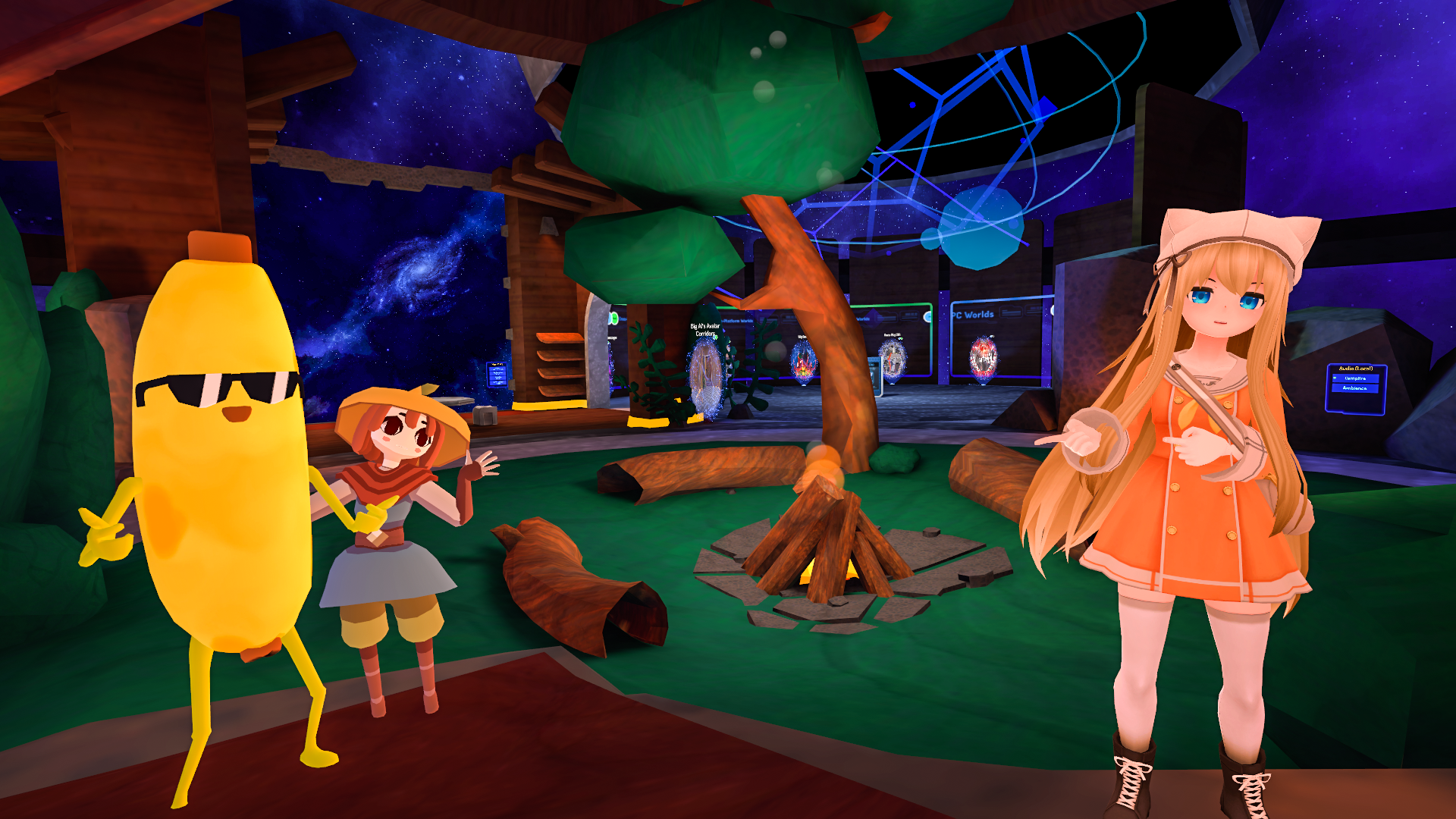



But for all you jaded folks out there, let me tell you that this is an absolutely unstoppable evolution of computing. All entertainment since sung epic poetry has aimed to briefly take us into another world. Plays, novels, movies, theme parks, and video games have always offered immersive fantasy. This is the ultimate fufilment of that very human impulse, to consciously enter another world. If we lose sight of that, then it will be up to the next generation of technologists to create it.